Category: Uncategorized

Icons Gone — brought back centre-stage!Icons Gone — brought back centre-stage!

0 Comments

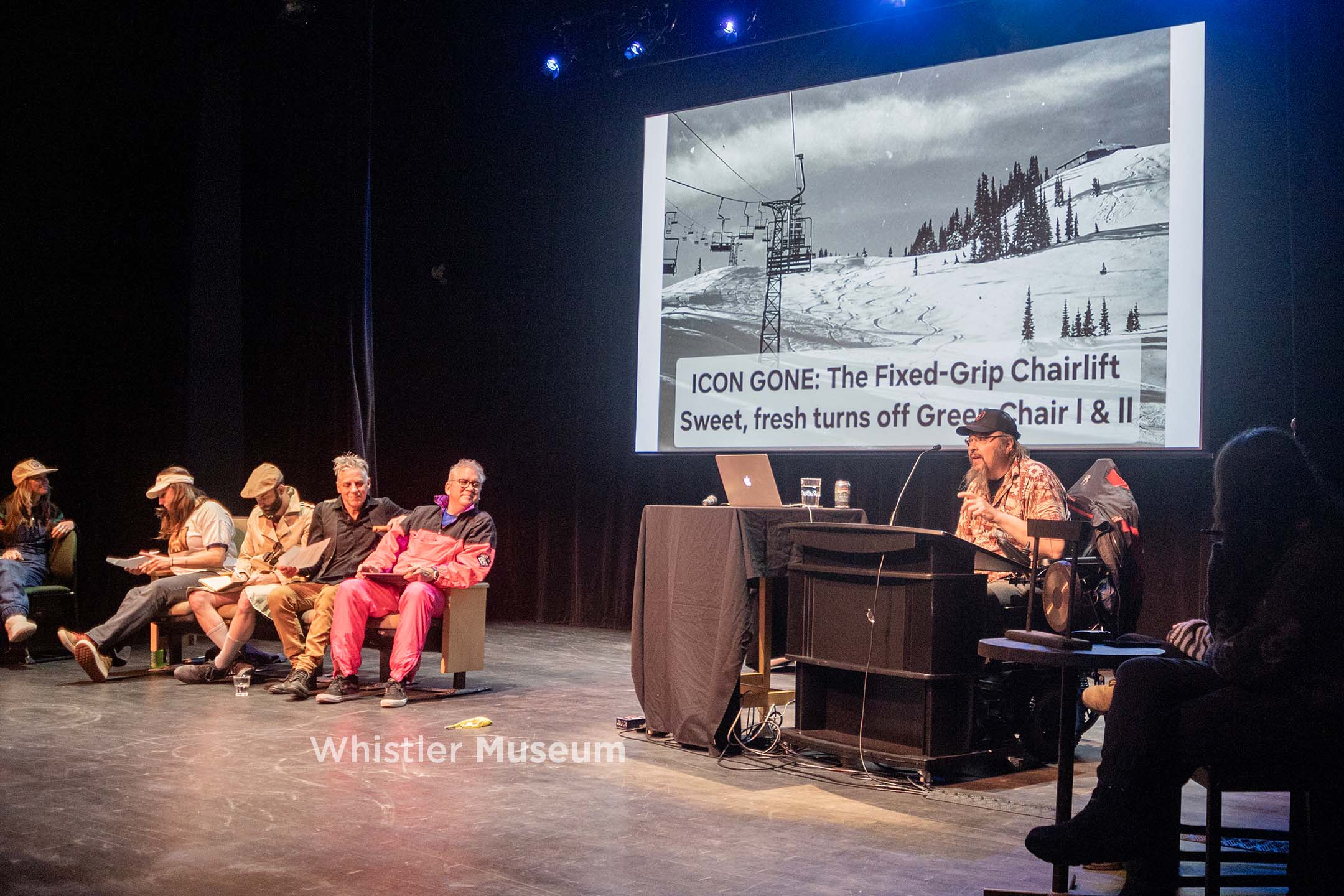
Featured Image: Keven “Big Kev” Mickelsen presents at last year’s Icon Gone. Whistler Museum Collection.

It could be argued that a signpost or a benchmark of a town’s maturity can be tabulated by how many significant symbols/things/happenings/elements-uniquely-local that have come to be associated with it, can now be referred to in the past tense… measuring a community’s forward trajectory by its ‘icons gone’.

Lamenting the legacy of legends-left-behind is the focus of next week’s ‘ICON GONE’ event put on by the Whistler Museum at the Maury Young Arts Centre/Millenium Place. The event began in 2008 and ran for many years up until 2013. It was resurrected last year with yet another all-star cast.

In a lively evening of friendly competition (tinged with debaucherous debate…it is, after all, 19+), six notable locals will take to the stage and argue for what they think is the largest loss in the landmark of Whistler-specific icons. The audience (through applause-and-yell-o-metre) along with a panel of equally notable judges will crown a champion. Nudity was the winner of last year’s debate. Citta’ (pronounced Cheetah’s, for those who don’t know), the runner up.

This year’s panel promises to deliver on all levels, covering the extremes from the raunchy to the contemplatively serious. Past topics have included everything from Fixed-Grip Chair Lifts to A-Frames, Squatters Cabins to The Boot Pub, the Passenger Train and Toonie Races to the Toad Hall Poster; from the Snow, Water, Earth Race to the Party Barge, Mountain Man Beards to Beavers. Gravity – as a topic, as a subject — even won one year.

The purpose of the evening is two, even three-fold. Undeniably, entertainment and community-fun are a major focus. However, the event also serves as a way to highlight the Museum’s local archive – and remind people of its absolute essential relevance. Through the eyes of the present we are given tools to reflect upon our past. ICON GONE serves to illustrate the value of preserving our stories, our legacies, our legends and some of the many ways which we can keep them alive. Humour is one of them, a method of honour. The archive is not a dusty, musty collection – it is active, vital and alive – infused only by our present perspectives.

In a December 5, 2025 editorial titled ‘Who remembers Whistler?’ Pique Newsmagazine editor Braden Dupuis deftly articulated the value of the Museum. ICON GONE offers the opportunity to showcase Dupuis’ points, worth repeating anew:

“If we don’t invest in institutions that collect, preserve, archive, and explain, we lose more than objects and photographs. We lose context. Identity. A sense of place beyond postcards and ski packages.

Left unchecked, the version of “Whistler history” that remains will be curated by marketing budgets: sleek, sanitized and built for outside consumption. It’s cultural erasure in its most casual, passive form.

[…]

By preserving history, we don’t resist change, we anchor it in respect. We ensure Whistler doesn’t forget it is more than a ski-lift and slopes, a playground for the rich or an ATM for faceless corporations—that it is a real community built by people, labour and continuity.”

In the spirit of continuity – through raucous reverence — let us celebrate the cornerstones of this community…

On Friday, April 17 – at 7:00 pm – join judges Ace MacKay-Smith, Julia Murray and Brandon Barrett as together we applaud debaters Feet Banks, Princess Stephanie, Stinky, Laugh Out Live’s Rebecca Mason, lawyer Tanya Kong — as they set to historically hammer home their iconic topic of choice!

For more information and Tickets, please visit www.whistlermuseum.org

Broads on Board: Broadening the Sport, Part IIBroads on Board: Broadening the Sport, Part II

0 Comments

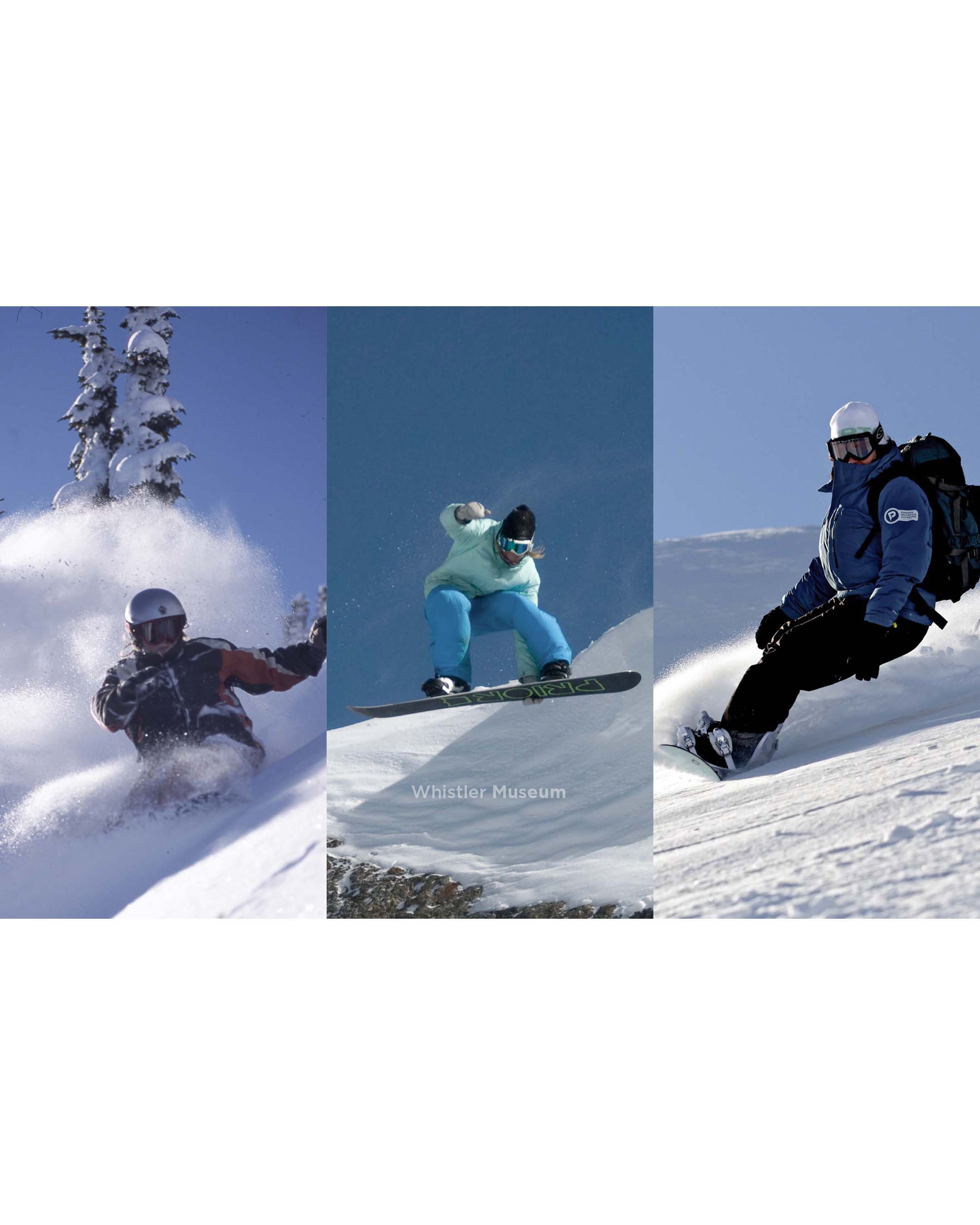
Featured Image: L – R: Punchy, Nes and Jibber / Photographer Credits: INISIGHT Collection, Shannon Doohan; Dagan Beach; Rich Glass

This article continues on from last week’s first installment featuring the reflections of three pioneering women from the early ‘golden age of snowboarding’ – ‘Punchy’ (Sherry [Newstead] Boyd), ‘Nes’ (Vanessa Stark) and ‘Jibber’ (Jennifer Godbout) – on the progression and progress of the sport, of the culture. These three ladies are all still making their respective marks and all helped carve a track for girls to come.

Punchy — a former member of the National Team, Alpine Dispatch worker and snowboarding stuntwoman for film — recalls “I actually had an older gentleman [skier] chase me down and come up to me as though he was going to assault me. And then I took off my goggles […] to show him that I was a girl. And he stopped. I said, ‘are you going to assault me?’”

In the beginning, there was no women-specific gear. No boards, no boots, no nothing. “I’d just wear extra socks,” smiles Jibber – former snowboarding coach and current member of Whistler Search and Rescue and backcountry split-board guide.  Suited up, girls were often assumed to be boys.

“I’ve been whipped by poles. But as soon as I’ve like turned around and they found out I was a girl, they were like, oh my God…,” Jibber recalls. Not only were these women navigating their way through the ‘Boys’ Club’ of their own sport, they were also manoeuvring through the initial tensions of ‘skiers versus snowboarders’ on the slopes.

Punchy reflects on past workplace dynamics where she was blacklisted for being a snowboarder, where it was insinuated and continuously affirmed: “you’re one of them and you are not welcome here.”

Nes — the first female to ever do ‘Air Jordan’ on a board, celebrated visual artist and former snowboard Park Ranger — inserts: “Even now, I ride the gondola and parents will be like, ‘Oh, don’t talk to them, they’re snowboarders!’”

Jibber suggests that a pivoting point for the culture of snowboarding has been parenting: “I think there’s a lot of dads that now have daughters that are competing. And I think that is the huge difference because all of a sudden they’re like, ‘well, my daughter deserves an opportunity.’ No shit, she does. … It’s different now that you have a daughter, eh? Treat them differently, eh? I mean, people have grown up, too. And everything is different. But I also remember.”

And remembering is key. Learning from our histories – and her-stories – are what help us collectively shape our futures.

And it also important to note that the under – or mis-representation of women – is not exclusive to snowboarding. It was, arguably, a pervasive social practice of the time that females (and males) are still trying to overcome. “Women in business, women in all sports, like it didn’t matter the sport, we were all experiencing that same thing,” comments Jibber.

But things are changing. For the better. Much better. Way better.

Punchy, now married to World Cup Ski Race Winner Rob Boyd, recalls “as much as snowboarders always got a bad rap from the uptight skiers, they very much cared for their own. There was a lot of love, a lot of camaraderie.”

And it’s that continued love and admiration that shines through, as these trailblazing women all beam with pride at the upcoming generation of female snow (and skate!) boarding go-getters, carving their own unique courses. Local names like Leanne Pelosi with her Full Moon Film and associated community of projects, the initiatives of Marie-France Roy, Jess Kumera’s The Uninvited film series and the work of the Real Wild Kittens and but a few of the many groundbreaking initiatives spearheaded by women: pioneering powerhouse pivots in the sport embracing multi-facetted inclusion.

Jibber comments on how she wanted to “make a deeper, broader path for the women behind me. And then I hope they do the same. And that’s always something that I really believed in is that you pay it forward.” And the notion of caring for ones’ own is clearly being evidenced in the sport, in the culture. She continues, “I think there’s a lot of incredible women who are forging forward. They’re just stomping down that path and making it better for the generation behind them.”

As Punchy urges: “don’t ever discount yourself. Believe that you are capable.” And that’s exactly what the gals are proving (still and again!)

*

The Museum is hosting an exciting Speakers Series ‘Recording the Scene: The POWerful History of Local Snowboard Documentation’ with an all-star cast on April 13, 7:00 pm. Purchase tickets through www.whistlermuseum.org.

Help protect biodiversity from invasive speciesHelp protect biodiversity from invasive species

0 Comments

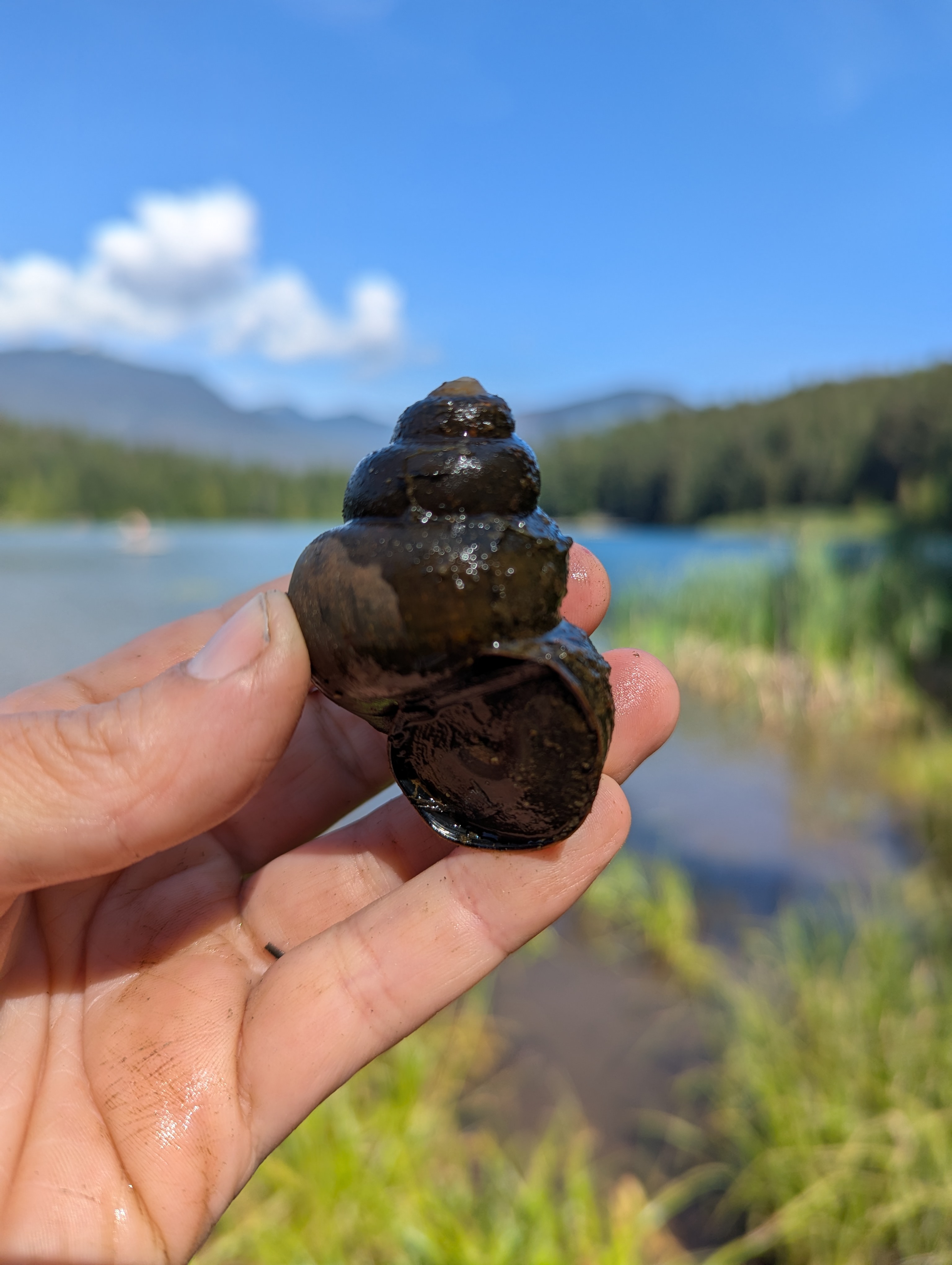
Feature Image: Chinese Mystery Snail at Lost Lake

“Nature once determined how we survive. Now we determine how nature survives.” – Sir David Attenborough

Whistler is fortunate to have the Sea to Sky Invasive Species Council (SSISC) to help protect biodiversity, our strongest natural defence against climate change. SSISC was formed in 2009 to minimize the threat of invasive species—species introduced from other regions, primarily by humans, that rapidly spread and cause significant harm to the environment, the economy, or human health.

It’s often mentioned that invasive species are the second most significant threat to biodiversity after habitat loss. What’s less commonly cited is that both invasive species and habitat loss are driven by economic growth. When we don’t acknowledge economic growth as the primary cause of biodiversity loss, we may believe that, with precautions and technological advances, we can continue to grow forever on a finite planet. However, as Sir Attenborough also has said, anyone who believes this is “either a madman or an economist.”

Some relatively good news among the bad news of invasive species is that, since mass access here was relatively recent (began with the arrival of the railway in 1914), Whistler has been exposed to invasive species for less time than our neighbours in Squamish (mid-1800s) and Pemberton (also mid-1800s when 30,000 gold-rushers passed through). Another positive is that ecologically minded residents have been removing invasive plants on their own initiative for years before SSISC formed. These advantages enable SSISC to now eradicate high-priority invasive plants, such as Scotch Broom, Himalayan Blackberry, and others, from Whistler.

The bad news is that humans spread invasive species, and the Resort is becoming busier, especially in the warmer months when invasives are more likely to spread. One unfortunate example is Whistler’s lakes. Most have been stocked with invasive Rainbow Trout for sport fishing, some as early as the 1920s. Unfortunately, not only did Rainbow Trout displace native Cutthroat Trout, but fish stocking can also introduce other invasive species that hitchhike in transported water and mud. Additionally, lake users who don’t “Clean Drain and Dry” their equipment risk transporting and spreading invasive species. Finally, many released aquarium pets become invasive species, and sadly, Whistler has multiple water bodies where released goldfish are devastating native fish and amphibians.

Western Toad.

The Whistler Museum operates its Discover Nature program at Lost Lake every summer, so we’re attuned to the ecology of the lake. We noticed giant snails (up to 6 cm) a few years ago, which seemed out of place, and indeed, they were. They turned out to be invasive Chinese Mystery Snails, and this year their populations grew exponentially—a typical trajectory for invasive species. SSISC confirms they are present in other Whistler lakes as well, but our concern for Lost Lake specifically is that it is the only place in the valley where Western Toads breed. The invasive snail can harm aquatic food webs, which the Western Toad is a big part of in Lost Lake.

We’re looking forward to working with SSISC and the municipality to see what can be done to protect Western Toads from invasive species. How the snails arrived is currently unknown, but could be any of the reasons above or a vector we don’t yet understand. To learn more about invasive species and how you can protect biodiversity, please visit SSISC.ca.

Whistler’s Remaining Old-growth ForestsWhistler’s Remaining Old-growth Forests

0 Comments

“Look closely at nature. Every species is a masterpiece, exquisitely adapted to the particular
environment in which it has survived. Who are we to destroy or even diminish biodiversity?”
– E. O. Wilson

Featured Photo: Whistler’s old trees are living monuments that have withstood centuries of change. Bob Brett, photographer.


Whistler is fortunate to be surrounded by temperate rainforest, which is essential to Whistler’s
appeal as a tourist destination. Forests have also proven to be highly beneficial for human
mental and physical health. Environmentally, trees are indispensable: they clean the air,
regulate temperature, manage water, store carbon, and provide places for our wildlife
neighbours to feed, breed, and rest. However, not all forests offer the same benefits.
Old-growth forests, defined as undisturbed for at least 250 years, are vital to addressing the
interconnected biodiversity and climate crises. Compared with second-growth forests, which
have regenerated after human disturbance, old-growth forests have a more complex ecological
structure that supports greater biodiversity. Whistler species that rely on old-growth forests
include the Spotted Owl (last heard in Whistler in 1946), Fisher, Goshawk, and a host of lichen,
fungi, mosses, insects and amphibians.


On the climate side, old-growth forests store vast amounts of carbon in living trees, dead wood,
and undisturbed soil. They also have greater climate resilience, and this is where things get
fascinating. A key feature of old-growth forests is that trees of multiple species are connected
below ground by a rich, complex fungal network that shares resources and information. Why
would trees do this? Suzanne Simard at UBC studies these interactions and has said, “Actually,
it doesn’t make evolutionary sense for trees to behave like resource-grabbing individualists.
They live longest and reproduce most often in a healthy, stable forest. That’s why they’ve
evolved to help their neighbours.”


Another way trees help their neighbours is by collaboratively managing microclimates for the
benefit of the entire community—providing shade, buffering wind, and cycling water. This
collaboration is another reason why, when old-growth forests are logged, they are gone forever.
The biodiversity and ecological functions lost are not recovered in subsequent forests, leading
to a loss of what made that ecosystem unique.


Since the early 1900s, Whistler’s forests have been logged extensively, and low-elevation old-
growth forests that once covered the valley are now found only in limited areas. Commercial
logging and thinning have continued by the Cheakamus Community Forest (CCF) since 2009,
though old-growth logging was deferred in 2021.


One thing we heard at their latest open house is that the CCF is considering managing old-
growth forests to “increase their resilience to climate change” as part of its broader Climate
Resilience Plan, which focuses on managing multiple forest values, including wildfire risk
reduction. Here things get tricky, because there are often unexpected negative consequences of
humans’ best intentions: interventions intended to solve one problem often create new,
unforeseen issues elsewhere in the complex, interconnected system of nature. Given that old-
growth forests thrive on stability, attempting to manage them doesn’t make ecological sense,
especially since they are already among the most climate-resilient ecosystems on Earth.


To learn more about Whistler’s irreplaceable old trees and forests, look for Whistler’s Old and
Ancient Trees Guide at the Whistler Museum and Armchair Books. It was created by local researcher Bob Brett and the Association of Whistler Area Residents for the Environment
(AWARE). Of note is that virtually all of Whistler’s remaining unlogged forests are over 300
years old, and Whistler’s oldest known living tree, a Yellow Cedar in the Callaghan Valley, is
estimated to be at least 1,250 years old. We are truly privileged to live among these magnificent
trees and forests.