Category: Museum News & Events

Whistler Museum in the community.

Crafts in the Park: Make a Coyote MaskCrafts in the Park: Make a Coyote Mask

0 Comments

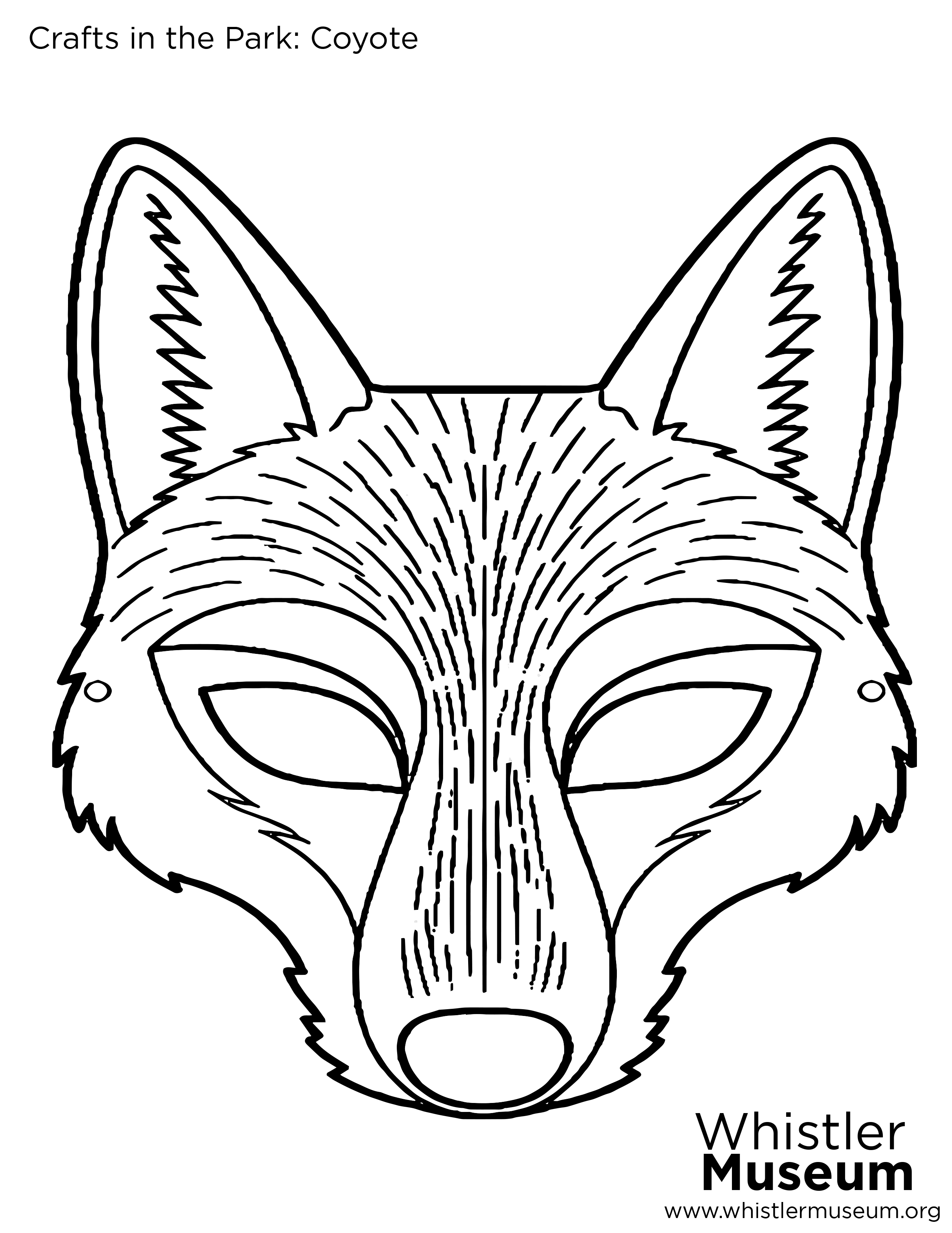
Welcome to our 2026 Crafts in the Park activity video on coyotes!

For this craft, you will need a printed copy of the coyote mask (linked below), scissors, string, markers, and any other materials you would like to use to decorate your mask.

Click here for printable mask.

About Coyotes

Coyotes belong to the same animal family as dogs and wolves. They are highly adaptable and can eat a wide variety of foods, including small rodents, insects, berries, and even leftovers left behind by other animals. As scavengers, coyotes play an important role in keeping the environment clean. As more people live and recreate around Whistler, encounters with coyotes have become more common. Coyotes have occasionally been known to follow people in an “escort-like” manner, guiding them out of their territory. This behaviour is more common when people are walking dogs, which coyotes may view as a threat. While coyotes are generally wary of people, they can become accustomed to humans when food is available. Coyotes are wild animals and should always be treated with caution, but there is usually no need to report them unless they are behaving aggressively.

Coyote in Whistler. Photo Courtesy Liz Barrett.

About the Program.

Crafts in the Park is presented in partnership with the Whistler Public Library, with support from the Province of British Columbia and the Resort Municipality of Whistler.

The in-person portion of the program takes place weekly from July 8 to August 19, 2026, from 11:00 a.m. to 12:00 p.m. at Florence Petersen Park. The program features nature-focused picture books and crafts for children aged six and under.

Find more Crafts in the Park activities and videos here.

Beyond TokenismBeyond Tokenism

0 Comments

The land now known as Whistler lies in the unceded territory of the Lílwat Nation and Skwxú7mesh Nation.

For centuries, colonial governments and settlers have displaced Indigenous Peoples from their lands throughout what is now known as Canada. Legislation such as the Indian Act of 1876, the creation of IndianReserves, and Indian Residential Schools [1831-1997] sought to separate Indigenous Peoples from their landsand cultural practices.

The Pre-emption Act of 1860 allowed colonial settlers in British Columbia to locate and claim sections of what the colonial government considered to be unoccupied Crown land.

In the late nineteenth century and early twentieth century, colonial settlers in the area today known as Whistler, pre-empted much of the land surrounding the valleys & lakes. This process did not consider Indigenous claims to land or uses such as seasonal villages of the Lílwat Nation and Skwxú7mesh Nation.

The devastating and horrific impacts of this history have been profound and continue to be felt by Indigenous communities today.

On Sunday, June 21, the Whistler Museum will be closed in honour of National Indigenous Peoples Day. We encourage both residents and visitors to Whistler to explore the celebrations at the Sḵwx̱wú7mesh Líl̓wat7úl Cultural Centre (SLCC). You can learn more about their events and offerings here.

Reconciliation takes on many forms.

We, at the Whistler Museum, are committed to learning from past wrongs and collectively working to pro-actively build collaborative futures: one where everyone’s stories and rights are thoroughly acknowledgement, upheld and honoured …

Icons Gone — brought back centre-stage!Icons Gone — brought back centre-stage!

0 Comments

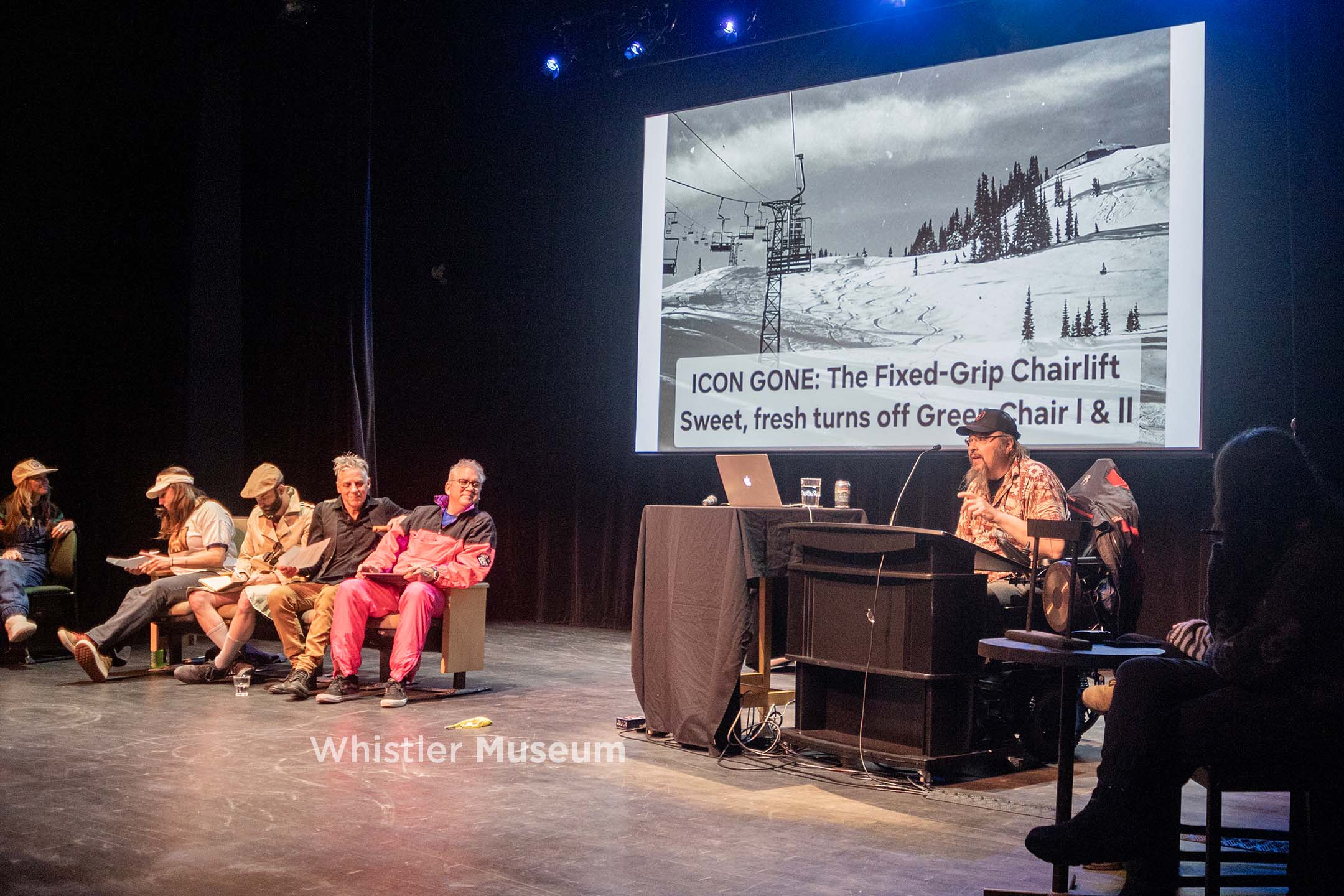
Featured Image: Keven “Big Kev” Mickelsen presents at last year’s Icon Gone. Whistler Museum Collection.

It could be argued that a signpost or a benchmark of a town’s maturity can be tabulated by how many significant symbols/things/happenings/elements-uniquely-local that have come to be associated with it, can now be referred to in the past tense… measuring a community’s forward trajectory by its ‘icons gone’.

Lamenting the legacy of legends-left-behind is the focus of next week’s ‘ICON GONE’ event put on by the Whistler Museum at the Maury Young Arts Centre/Millenium Place. The event began in 2008 and ran for many years up until 2013. It was resurrected last year with yet another all-star cast.

In a lively evening of friendly competition (tinged with debaucherous debate…it is, after all, 19+), six notable locals will take to the stage and argue for what they think is the largest loss in the landmark of Whistler-specific icons. The audience (through applause-and-yell-o-metre) along with a panel of equally notable judges will crown a champion. Nudity was the winner of last year’s debate. Citta’ (pronounced Cheetah’s, for those who don’t know), the runner up.

This year’s panel promises to deliver on all levels, covering the extremes from the raunchy to the contemplatively serious. Past topics have included everything from Fixed-Grip Chair Lifts to A-Frames, Squatters Cabins to The Boot Pub, the Passenger Train and Toonie Races to the Toad Hall Poster; from the Snow, Water, Earth Race to the Party Barge, Mountain Man Beards to Beavers. Gravity – as a topic, as a subject — even won one year.

The purpose of the evening is two, even three-fold. Undeniably, entertainment and community-fun are a major focus. However, the event also serves as a way to highlight the Museum’s local archive – and remind people of its absolute essential relevance. Through the eyes of the present we are given tools to reflect upon our past. ICON GONE serves to illustrate the value of preserving our stories, our legacies, our legends and some of the many ways which we can keep them alive. Humour is one of them, a method of honour. The archive is not a dusty, musty collection – it is active, vital and alive – infused only by our present perspectives.

In a December 5, 2025 editorial titled ‘Who remembers Whistler?’ Pique Newsmagazine editor Braden Dupuis deftly articulated the value of the Museum. ICON GONE offers the opportunity to showcase Dupuis’ points, worth repeating anew:

“If we don’t invest in institutions that collect, preserve, archive, and explain, we lose more than objects and photographs. We lose context. Identity. A sense of place beyond postcards and ski packages.

Left unchecked, the version of “Whistler history” that remains will be curated by marketing budgets: sleek, sanitized and built for outside consumption. It’s cultural erasure in its most casual, passive form.

[…]

By preserving history, we don’t resist change, we anchor it in respect. We ensure Whistler doesn’t forget it is more than a ski-lift and slopes, a playground for the rich or an ATM for faceless corporations—that it is a real community built by people, labour and continuity.”

In the spirit of continuity – through raucous reverence — let us celebrate the cornerstones of this community…

On Friday, April 17 – at 7:00 pm – join judges Ace MacKay-Smith, Julia Murray and Brandon Barrett as together we applaud debaters Feet Banks, Princess Stephanie, Stinky, Laugh Out Live’s Rebecca Mason, lawyer Tanya Kong — as they set to historically hammer home their iconic topic of choice!

For more information and Tickets, please visit www.whistlermuseum.org

A First Look at the proposed New Whistler Museum.A First Look at the proposed New Whistler Museum.

0 Comments

Join us at the Whistler Museum on Wednesday, November 26 from 4–7 p.m. as we share the first look at the proposed design for the new Museum facility. This open house marks the beginning of an important stage in shaping a new home to share and preserve Whistler’s stories.

Visitors will be able to explore design renderings and panels that showcase a 15,000+ sq. ft. purpose-built, mass-timber museum. The envisioned facility will include expanded exhibition galleries, archival and research spaces, and flexible areas for programs and community events, creating a vibrant, sustainable gathering place for Whistler’s history and people.

As part of this event, we’re asking the community to share their input on the stories, themes, and what experiences they would like to see featured in the new museum facility. Feedback gathered during the evening, and through an accompanying online survey, will directly help guide the development of the exhibit content, design, and interpretation in the next phase of planning.

  • View the architectural design and exhibit concepts for the New Whistler Museum
  • Learn about sustainability, accessibility, and building features
  • Meet members of the Museum’s team and design collaborators
  • Share your ideas through short surveys and conversation stations
  • Help shape the future of Whistler’s museum experience
  • Enjoy light refreshments and snacks while connecting with museum staff and project team

This open house is the first in a series of engagement opportunities designed to ensure the new Whistler Museum reflects the voices and values of the community it serves.