Jurassic Park : Blackcomb is 50-70 million years older than Whistler Jurassic Park : Blackcomb is 50-70 million years older than Whistler
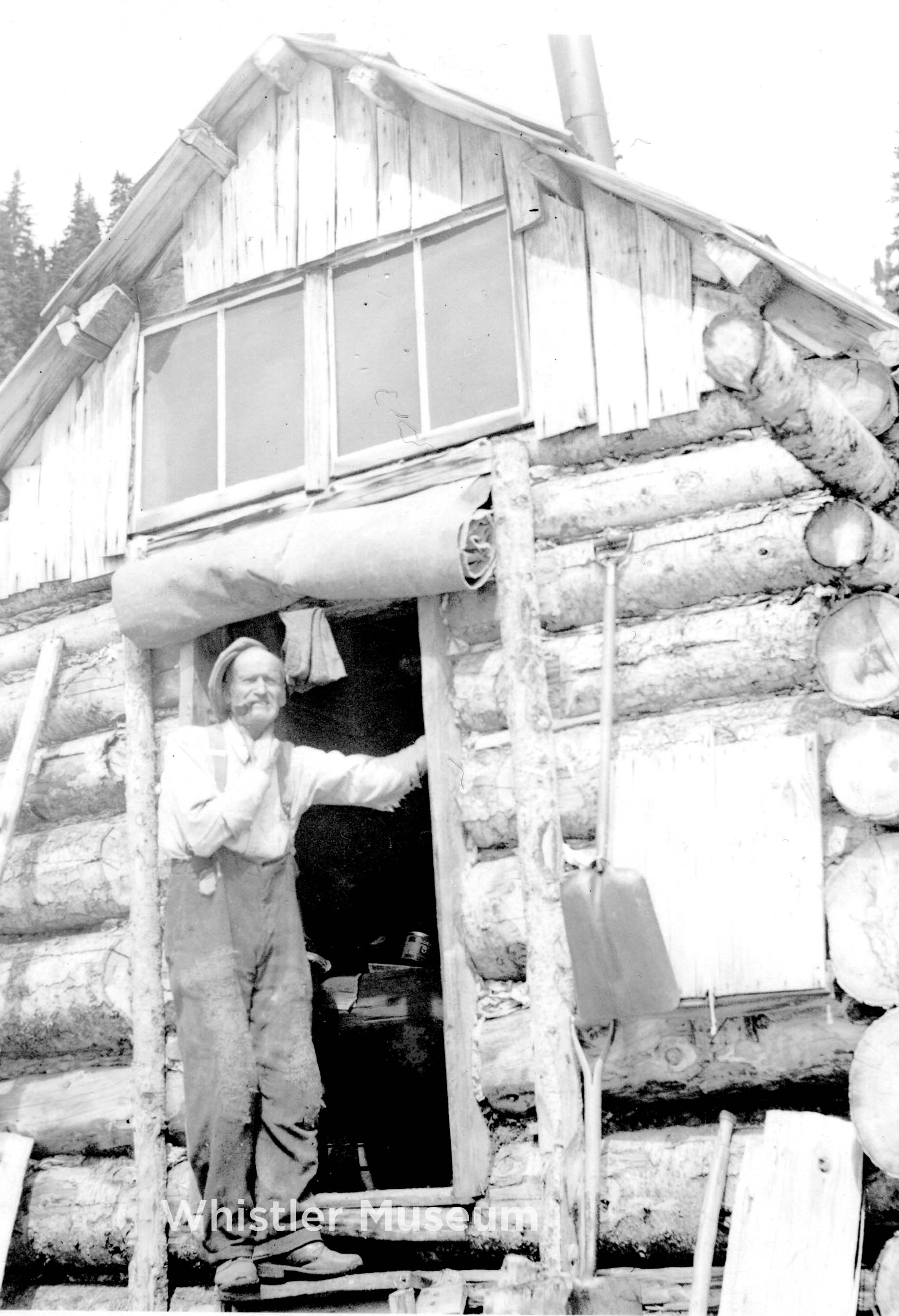
Featured Image: Prospector Henry ‘Harry’ Horstman arrived in 1913. Though Horstman Glacier and Hut on Blackcomb are named after him, he did not stake any claims on the mountain. Photo: Brock Collection.
‘The Fault of Fitzsimmons’
Whistler and Blackcomb mountains have very different histories.
Their differing stories far predate the 80s and 90s ‘Duel of the Dual Mountains’ which played itself out in past battles to access vaster and more expansive alpine ski terrain, faster (a one-upping between once-independent resorts, jostling for prominence, where the launched weaponry was the 7th Heaven T-Bar with the retaliatory firing of the Peak Chair, followed by 7th Heaven Express and Peak Express)…
We’re not talking decades-ago-differences, here.

We are speaking about epochs, eras, periods… years. Hundreds of millions of them.
We are talking geology and geography: the language of our local landforms.
We are speaking about the background of our backyard rocks: what follows is a barebones breakdown of the basics.
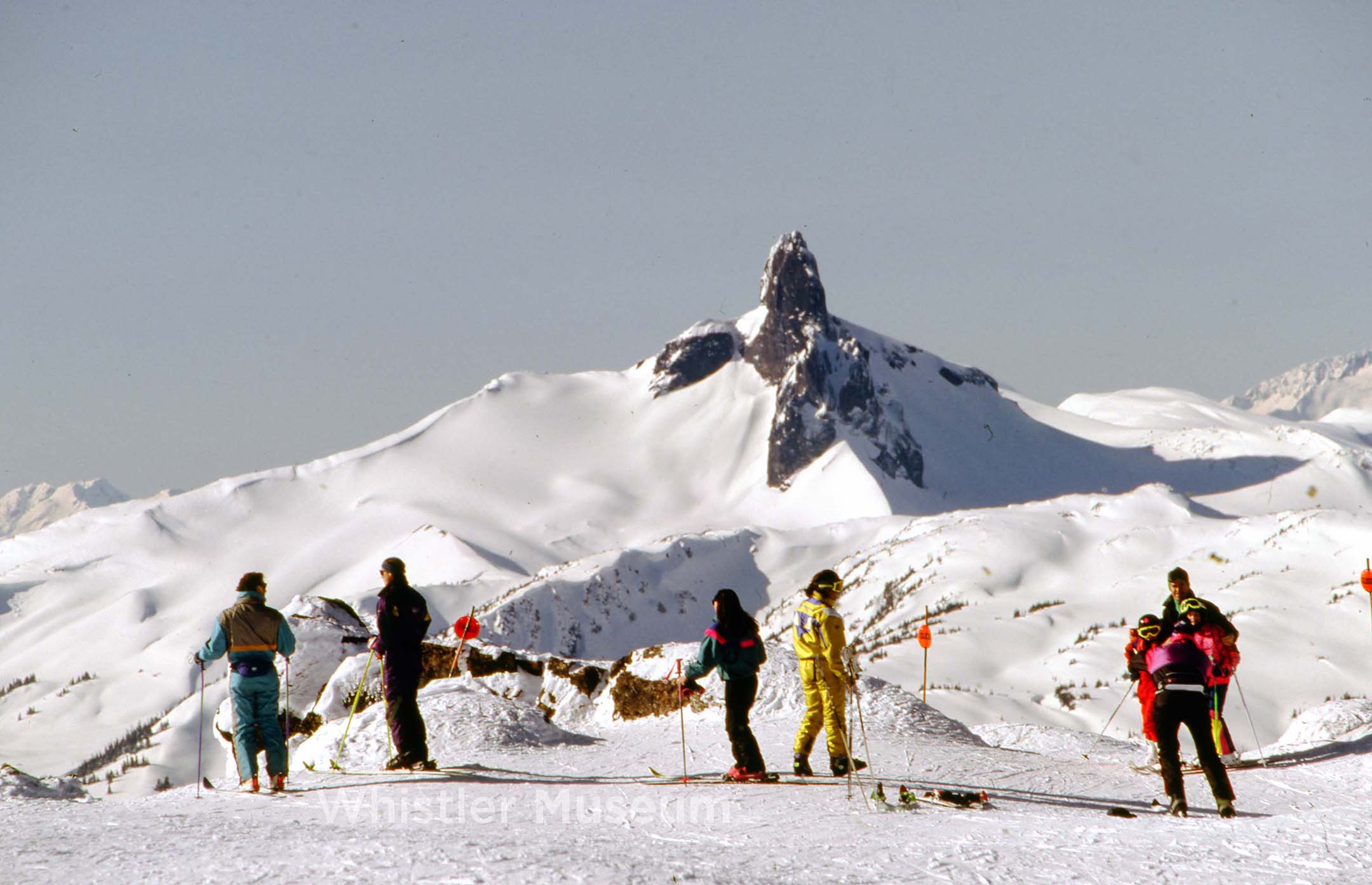
Blackcomb came first. A product of the Jurassic Period, the mountain is about 150 million years old. Blackcomb is formed primarily of hard, salt-and-pepper coloured granodiorite. Granodiorite forms about 80% of the Coast Mountains: igneous rock, developed from cooled and crystallized magma protons. It would be fair to say when venturing on Blackcomb, one is entering Jurassic Park.
Whistler is about 80 million years old. It is formed of sedimentary, volcanic rock: shale and andesite, deposited in a marine basin during the Cretaceous Period. Fossils can be found high atop its peak. It was once the ocean floor. During the summer, the famed ‘Shale Slope’ appears as a red streak, visible as one rides the Peak Chair: rising through the stratas of geologic upheaval.
“The reason there is such diverse geology crammed together in the Whistler area is that the rocks are exotic and were actually formed in different geological settings, hundreds or thousands of kilometers west and south of where they are now. Over time, they were transported by massive oceanic plates like a conveyor belt to the West Coast, until 100 million years ago when they started to “accrete” (stick on) to continental America,” wrote geologist Steve Carney for the Whistler Naturalists (2023).
Blackcomb was (as were Wedge, Weart and Cook) pushed up by the Pacific Plate. Whistler rose up due to tectonic action of the Fitzsimmons Fault: the dividing valley line between Blackcomb and Whistler and “a recurring geologic feature in the valley and around the townsite,” according to Fire and Ice, the website spearheading the petition to have the area designated a UNESCO GeoRegion. The Fitzsimmons Fault line runs directly through Whistler’s Ego Bowl and is also clearly exposed along a 4-km stretch of Hwy 99 between Creekside and Whistler Village. It can be identified by its “mineral-rich rocks whose yellow cast is the result of sulfuric gasses circulating over thousands of years deep in the fault zone.”
The Fault, Valley and Creek that runs through it (into Green Lake) is named after prospector Jimmy Fitzsimmons. The miner staked copper claims, and dug for metals – in shafts still visible – along the Singing Pass Trail.
Just opposite, on Blackcomb’s lower flanks, prominent “gossans” can be seen. Fire and Ice describe them as “outcrops of oxidized and heavily metamorphosed rocks that can indicate the presence of ore deposits.”
Prospecting forms an active part of the area’s ‘more recent’ history. Whistler was known previously as London Mountain: likely named for the mineral claim “staked for Frederick James Proctor of the London & British North America Mining Co. of Vancouver, in 1903,” according to the BC government. The Horstman Glacier (and hut) on Blackcomb were named after the prospector who arrived in the area in 1913 in search of gold. However, ironically, Horstman did not stake any mining claims on Blackcomb.
Down in the valley, in the rich wetlands of the Fitzsimmons Delta, the Alta Lake Mining Company began mining in 1916 for iron. The metal originated from the mineral-rich from the towering igneous rocks, and was transported in groundwater and runoff into the lakeside bogs where it oxidized and was deposited as “bog iron.” At its height, the company was producing 150 tonnes of iron per day, which it transported by railway to Squamish, then onward to Washington state.
From plates to peaks, the local area is one of the most geologically diverse.
For more information about local geological features visit https://fireandicegeoregion.ca and https://www.whistlernaturalists.ca.