Category: Snowboarding

Broads on Board: Broadening the Sport, Part IIBroads on Board: Broadening the Sport, Part II

0 Comments

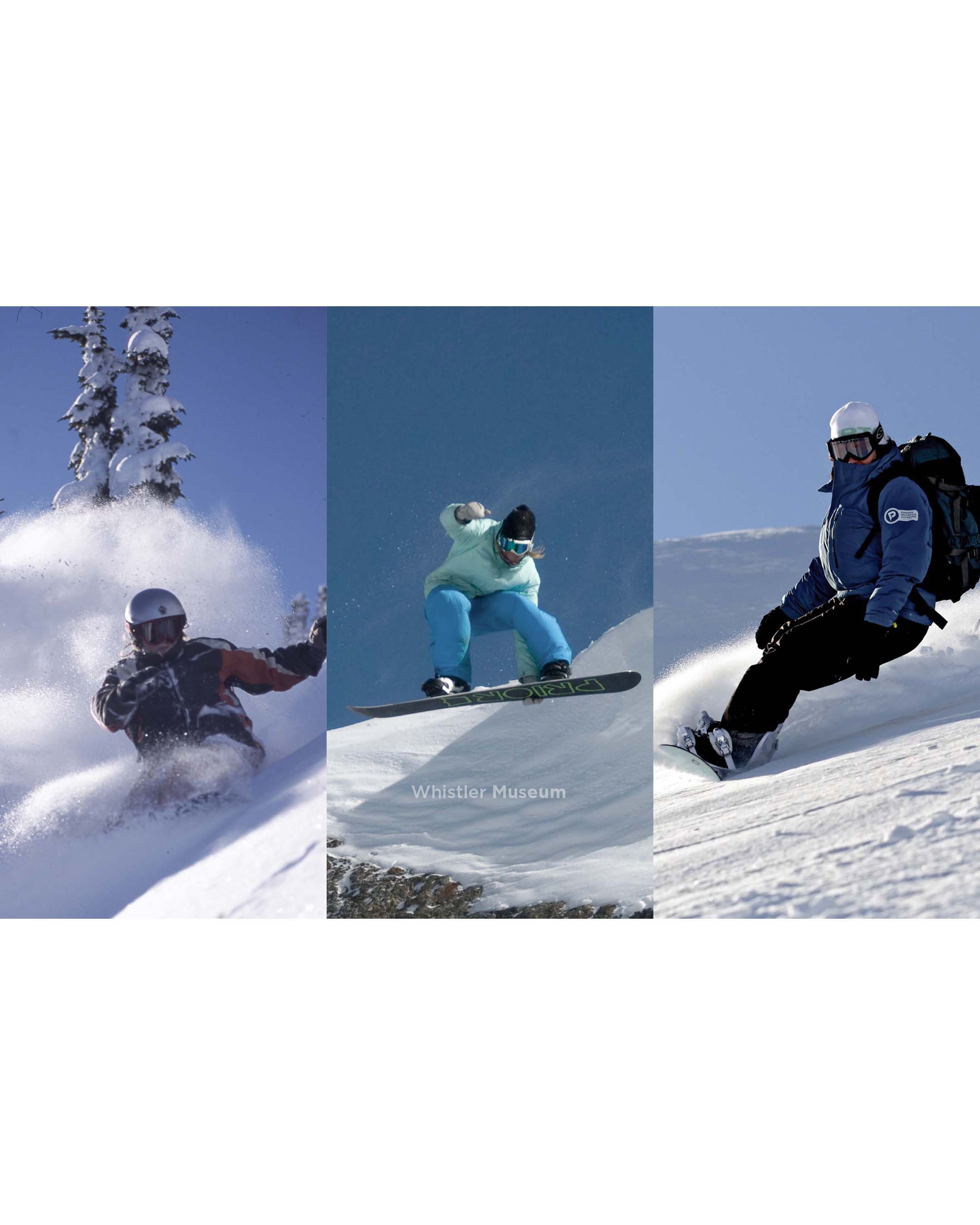
Featured Image: L – R: Punchy, Nes and Jibber / Photographer Credits: INISIGHT Collection, Shannon Doohan; Dagan Beach; Rich Glass

This article continues on from last week’s first installment featuring the reflections of three pioneering women from the early ‘golden age of snowboarding’ – ‘Punchy’ (Sherry [Newstead] Boyd), ‘Nes’ (Vanessa Stark) and ‘Jibber’ (Jennifer Godbout) – on the progression and progress of the sport, of the culture. These three ladies are all still making their respective marks and all helped carve a track for girls to come.

Punchy — a former member of the National Team, Alpine Dispatch worker and snowboarding stuntwoman for film — recalls “I actually had an older gentleman [skier] chase me down and come up to me as though he was going to assault me. And then I took off my goggles […] to show him that I was a girl. And he stopped. I said, ‘are you going to assault me?’”

In the beginning, there was no women-specific gear. No boards, no boots, no nothing. “I’d just wear extra socks,” smiles Jibber – former snowboarding coach and current member of Whistler Search and Rescue and backcountry split-board guide.  Suited up, girls were often assumed to be boys.

“I’ve been whipped by poles. But as soon as I’ve like turned around and they found out I was a girl, they were like, oh my God…,” Jibber recalls. Not only were these women navigating their way through the ‘Boys’ Club’ of their own sport, they were also manoeuvring through the initial tensions of ‘skiers versus snowboarders’ on the slopes.

Punchy reflects on past workplace dynamics where she was blacklisted for being a snowboarder, where it was insinuated and continuously affirmed: “you’re one of them and you are not welcome here.”

Nes — the first female to ever do ‘Air Jordan’ on a board, celebrated visual artist and former snowboard Park Ranger — inserts: “Even now, I ride the gondola and parents will be like, ‘Oh, don’t talk to them, they’re snowboarders!’”

Jibber suggests that a pivoting point for the culture of snowboarding has been parenting: “I think there’s a lot of dads that now have daughters that are competing. And I think that is the huge difference because all of a sudden they’re like, ‘well, my daughter deserves an opportunity.’ No shit, she does. … It’s different now that you have a daughter, eh? Treat them differently, eh? I mean, people have grown up, too. And everything is different. But I also remember.”

And remembering is key. Learning from our histories – and her-stories – are what help us collectively shape our futures.

And it also important to note that the under – or mis-representation of women – is not exclusive to snowboarding. It was, arguably, a pervasive social practice of the time that females (and males) are still trying to overcome. “Women in business, women in all sports, like it didn’t matter the sport, we were all experiencing that same thing,” comments Jibber.

But things are changing. For the better. Much better. Way better.

Punchy, now married to World Cup Ski Race Winner Rob Boyd, recalls “as much as snowboarders always got a bad rap from the uptight skiers, they very much cared for their own. There was a lot of love, a lot of camaraderie.”

And it’s that continued love and admiration that shines through, as these trailblazing women all beam with pride at the upcoming generation of female snow (and skate!) boarding go-getters, carving their own unique courses. Local names like Leanne Pelosi with her Full Moon Film and associated community of projects, the initiatives of Marie-France Roy, Jess Kumera’s The Uninvited film series and the work of the Real Wild Kittens and but a few of the many groundbreaking initiatives spearheaded by women: pioneering powerhouse pivots in the sport embracing multi-facetted inclusion.

Jibber comments on how she wanted to “make a deeper, broader path for the women behind me. And then I hope they do the same. And that’s always something that I really believed in is that you pay it forward.” And the notion of caring for ones’ own is clearly being evidenced in the sport, in the culture. She continues, “I think there’s a lot of incredible women who are forging forward. They’re just stomping down that path and making it better for the generation behind them.”

As Punchy urges: “don’t ever discount yourself. Believe that you are capable.” And that’s exactly what the gals are proving (still and again!)

*

The Museum is hosting an exciting Speakers Series ‘Recording the Scene: The POWerful History of Local Snowboard Documentation’ with an all-star cast on April 13, 7:00 pm. Purchase tickets through www.whistlermuseum.org.
Broads on boardsBroads on boards

0 Comments

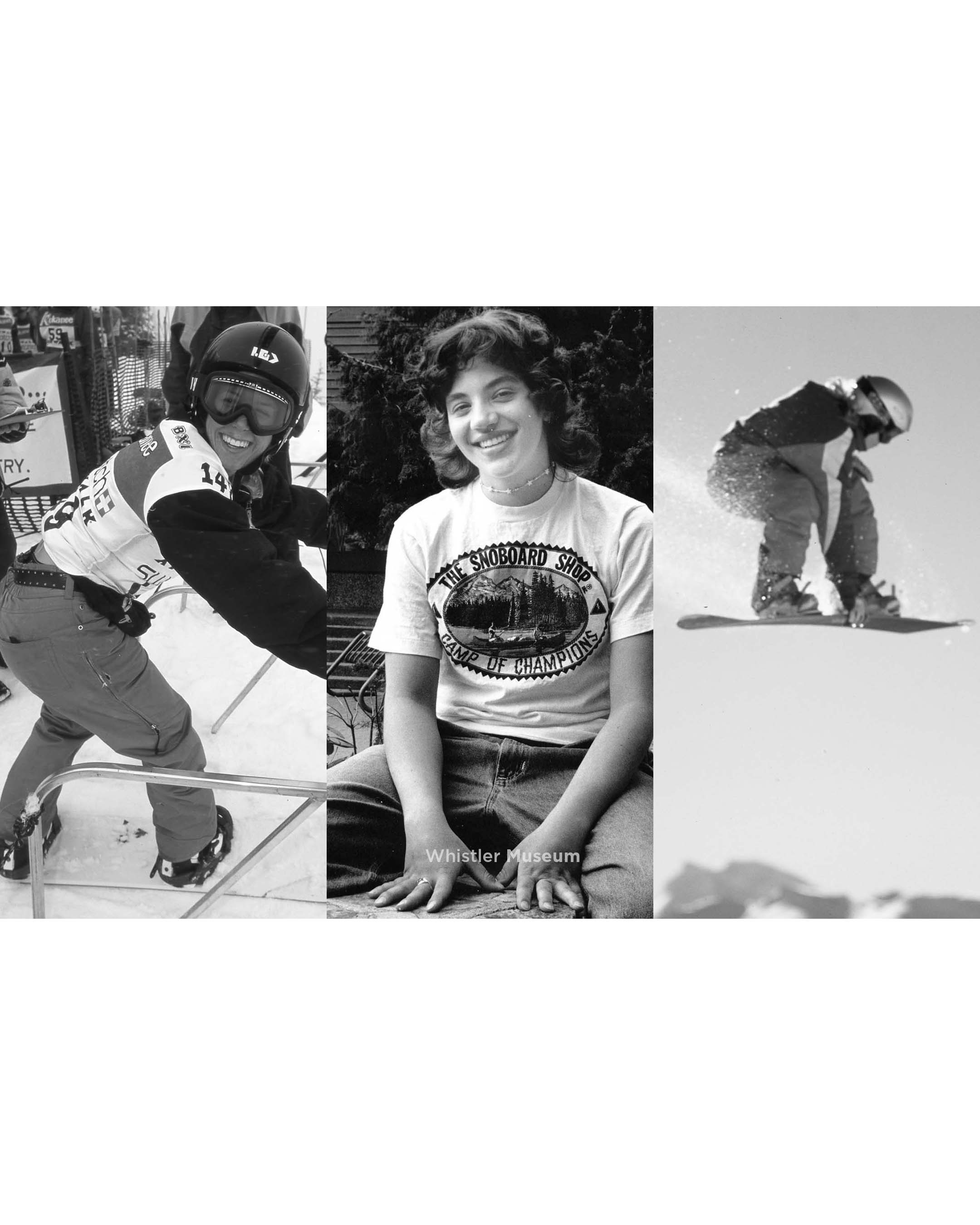
Feature Image: From Left to Right: Nes, Jibber and Punchy (L to R: INSIGHT Collection, Grey Eymundson; Whistler Question Collection; INSIGHT Collection, Shannon Doohan)

“The most exciting thing to watch right now is women’s snowboarding, women’s skateboarding,” exclaims Jen ‘Jibber’ Godbout – one of the original gals who made her mark amongst the 90s ‘bad-boy’ local boarding scene.

‘Broads on Board’ features the reflections of three pioneering women from the early ‘golden age of snowboarding’ – ‘Punchy’ (Sherry [Newstead] Boyd), ‘Nes’ (Vanessa Stark) and Jibber – on the progression and progress of the sport, of the culture. These three ladies are all still making their respective marks and all helped carve a track for girls to come. All three have also been instrumental in helping the Museum develop its snowboarding archive, coming in and recording Oral Histories. This is an important step in helping gather, save, share and honour the rich snowboarding history here in Whistler.

During the early genesis of snowboarding, there is no denying that the focus was on the men of the era. “It really proves the point that we needed a showcase and we needed equal opportunity. […] We just weren’t given the same opportunities. We didn’t get the same exposure,” reflects Jibber: a respected former snowboarding coach and current member of Whistler Search and Rescue and backcountry split-board guide.

There were fewer girls shredding back in the early 90s. There were “not a lot of us,” reflects Nes, but women definitely were there. There were “amazing standout girls,” recalls Punchy; gals who both inspired and defied norms, they just weren’t being featured much in magazines or vids. It is important to note that the under – or mis-representation of women – is not exclusive to snowboarding…and the intention here is not to finger-point, rather to honour and celebrate.

“It was so much harder back then,” comments Nes, for women in snowboarding. Recognized as being the first female to ever do ‘Air Jordan’ on a board, and equally celebrated visual artist, the former snowboard Park Ranger and Camp of Champions coach beams as she says: “I love seeing what’s going on now. Females are so much more supported, so much more, and they’re all in it together…there’s way more community. […] Back then, it was, like, you’re on your own.”

“When you have that equality, it really brings the whole sport back,” remarks Jibber, who was told directly that “they were never going to take a woman to the Olympics as a coach.” At the time, she was coaching Mercedes Nicholl, before her debut at her first Olympics.

And things aren’t entirely equal yet – “It’s much better than it used to be,” qualifies Nes – but, females in snowboarding are getting recognition beyond just the stigmatized status of being ‘pro hos’; rather, as legitimately strong athletes, competitors, coaches and powerhouse “chargers”, as Punchy puts it. “I think there was a certain sense, amongst the boys, that girls were just inherently lame.” Boyd earned her nickname, though affectionately granted, for her noted ability to be able to assert herself as ‘one of the guys’.

Nes recalls, “Back then, I’d be, the token girl on this company, and they’d say ‘Oh, yeah, all the guys are going and gonna hit all these sick pillows’ – which was what I wanted to do — but the girls are gonna do a shoot on the icy mountain.” There simply wasn’t as much funding or willingness to back female riders. “Girls weren’t even allowed to do big air contests.”

But, as Punchy — a former member of the National Team, Alpine Dispatch worker and snowboarding stuntwoman for film – recalls, “if a girl wasn’t lame and actually, you know, like was a charger, then they were welcomed in.”

Part II continues next week …

Boarder Bob: Whistler-based 1990’s Comic StripBoarder Bob: Whistler-based 1990’s Comic Strip

0 Comments

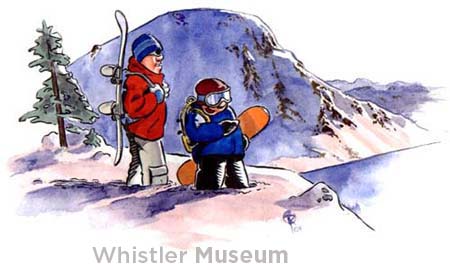
Featured image: Boarder Bob comic illustrated by Olivier Roy, published in Snowboard Canada Magazine (starting somewhere in the mid-nineties!)

Olivier (Oli) Roy is “an artist snowboarder” who first came to Whistler “right after high school in 1990” to attend a Craig Kelly Camp. He moved here, three years later, after art college. 

Now, with a career of more than thirty years of ongoing coaching and creating under his belt, he holds a Lifetime Whistler Blackcomb Pass in one hand, a paintbrush in the other and continues to ride the endless canvas offered up by the mountain: artistically and athletically.

The early/mid-nineties has been referred to as the ‘golden age of snowboarding.’ It was fresh, edgy and still relegated to counter-culture status. In Whistler, it was synonymous with a lifestyle and a community. 

During this era, the Ontario-based Snowboard Canada Magazine was born. Broadening their output, they enlisted Roy, as he describes,  a “cool artist.” 

Thus, Boarder Bob – the character and comic strip – were born. Border Bob “moves to Whistler to pursue [his] dream of being a pro snowboarder, but he’s very delusional … ​​he thinks he’s a big shot…” But, he’s not. After a season or two,  “he gets a sidekick, Jed Shred.”  

Jed is a devoted fan: “he’s all like, ‘Oh, Boarder Bob, you’re so epic’. But, as is proven – through Bob’s trials, tribulations and failed attempts at ease and epicness – he is anything and everything, but. 

Roy collaborated with local Glenn Rogers – known for his comic panels in The Whistler Question (a former, local publication started in 1976) – to produce the strip. The two worked together for eight years (“if I remember correctly”, states Roy), producing the 8 panel, 2 row, half-page ‘Boarder Bob’ strip. Published four times a year, “we had a lot of fun” poking fun at the “life of snowboarding in Whistler and on the West Coast.” 

The stresses of balancing the desire to shred while staying fed, being able to board while needing to find literal board-ing to trying to be the bawler at the bar were all fodder for the two creative duos: Roy and Rogers, Bob and Jed. Moral quandaries were occasionally tackled through the ink of these stories: “should we risk everything to be in the shot?!” Arguably, Boarder Bob was 90% total fun, 10% tackling that ‘the stakes are real’.

Boarder Bob Comic. Illustrated by Olivier Roy, written by Glenn Rogers: featured in Snowboard Canada Magazine. The comic strip ran between 1995-2002 approximately.

The comic ran from about 1995 to 2002, or thereabouts. The pinpointing of specifics is about as precise as Bob’s technique, working more with the “ish” verb. However, when it comes to the technical hows of developing the strip, the collaborative process between Roy and Rogers was fine tuned. 

Rogers would usually come up with the story. Admittedly, Roy states “I was never good at writing the stories, I was more the artist and inker.” He would receive the script and then sketch it, all by hand, on an 11 x 17 piece of cardboard:

“I would pencil it and then use China ink [for] the black and white and use markers, like alcohol markers and a bit of watercolor.” It was all hand-lettered.  “And then I would send it by FedEx back to Snowboard Canada magazine. And I, I remember a few times where the FedEx guy would ring the bell and I would still be finishing … after an all nighter.” Each strip took between 10-20 hours. “It was a labour of love,” Roy reminisces. “I loved it.”

Boarder Bob eventually got abducted by aliens (I mean, why not?) – or this is insinuated, but never confirmed for the reader. “There’s a UFO and he disappears.”

Boarder Bob carved out a seminal space in the culture and history of snowboarding art, taking its place in the local legacy of slope-inspired comic strips. The Peak Bros ran from 1979-2002 (in The Whistler Answer and Whistler Review), poking fun at 80s ski culture, whereas Boarder Bob tackled the snowboarding shenanigans of the nineties. 

Roy continued, and continues, to flourish on and off the slopes: the line between his art and sport overlapping. 

He has illustrated for Snowboarder Magazine (the prominent US publication), been Whistler Blackcomb’s online illustrator, designed top sheets for such companies as Prior, Luxury and Option Snowboards; been sent to Ottawa as a Whistler Art Ambassador in 2010 for Canada Day and continues to regularly produce art that showcases the mountains and its vibrant culture. 

The born-in-Montréal skateboarding kid who first came out to join Craig Kelly’s summer camps on the glacier, to then gain accolades as a competitive snowboarder in “half pipe contests, some slope styles, some boarder cross” to now working for Whistler Blackcomb’s Alpine Program and holding the title of being Whistler Valley Snowboard Club’s longest-running coach, working with the program since its inception almost 30 years ago – has literally drawn together the lines of on and off-mountain creativity. 


Boarder Bob Comic. Illustrated by Olivier Roy, written by Glenn Rogers: featured in Snowboard Canada Magazine. The comic strip highlighted and poked fun at the Whistler snowboarding scene of the nienties.