Category: Uncategorized

Whistler’s Remaining Old-growth ForestsWhistler’s Remaining Old-growth Forests

0 Comments

“Look closely at nature. Every species is a masterpiece, exquisitely adapted to the particular
environment in which it has survived. Who are we to destroy or even diminish biodiversity?”
– E. O. Wilson

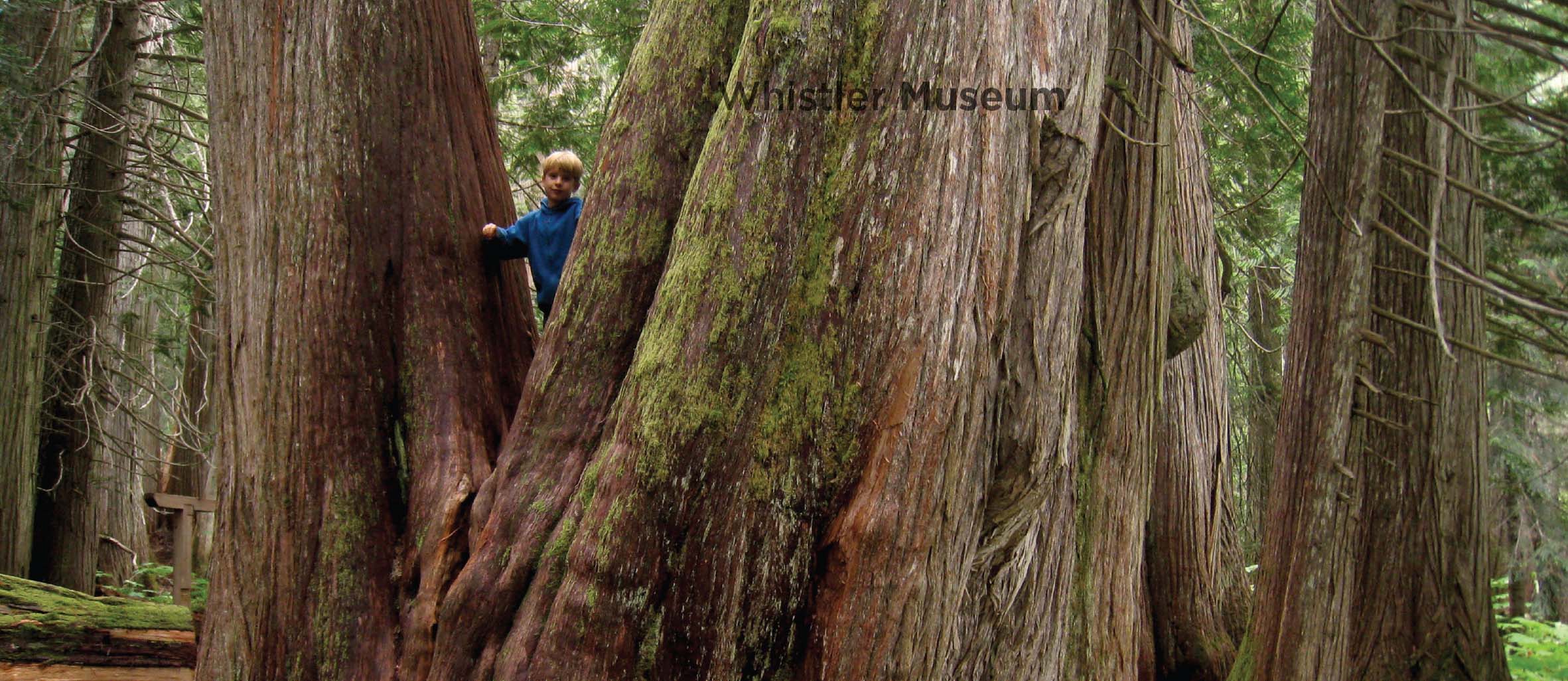
Featured Photo: Whistler’s old trees are living monuments that have withstood centuries of change. Bob Brett, photographer.


Whistler is fortunate to be surrounded by temperate rainforest, which is essential to Whistler’s
appeal as a tourist destination. Forests have also proven to be highly beneficial for human
mental and physical health. Environmentally, trees are indispensable: they clean the air,
regulate temperature, manage water, store carbon, and provide places for our wildlife
neighbours to feed, breed, and rest. However, not all forests offer the same benefits.
Old-growth forests, defined as undisturbed for at least 250 years, are vital to addressing the
interconnected biodiversity and climate crises. Compared with second-growth forests, which
have regenerated after human disturbance, old-growth forests have a more complex ecological
structure that supports greater biodiversity. Whistler species that rely on old-growth forests
include the Spotted Owl (last heard in Whistler in 1946), Fisher, Goshawk, and a host of lichen,
fungi, mosses, insects and amphibians.


On the climate side, old-growth forests store vast amounts of carbon in living trees, dead wood,
and undisturbed soil. They also have greater climate resilience, and this is where things get
fascinating. A key feature of old-growth forests is that trees of multiple species are connected
below ground by a rich, complex fungal network that shares resources and information. Why
would trees do this? Suzanne Simard at UBC studies these interactions and has said, “Actually,
it doesn’t make evolutionary sense for trees to behave like resource-grabbing individualists.
They live longest and reproduce most often in a healthy, stable forest. That’s why they’ve
evolved to help their neighbours.”


Another way trees help their neighbours is by collaboratively managing microclimates for the
benefit of the entire community—providing shade, buffering wind, and cycling water. This
collaboration is another reason why, when old-growth forests are logged, they are gone forever.
The biodiversity and ecological functions lost are not recovered in subsequent forests, leading
to a loss of what made that ecosystem unique.


Since the early 1900s, Whistler’s forests have been logged extensively, and low-elevation old-
growth forests that once covered the valley are now found only in limited areas. Commercial
logging and thinning have continued by the Cheakamus Community Forest (CCF) since 2009,
though old-growth logging was deferred in 2021.


One thing we heard at their latest open house is that the CCF is considering managing old-
growth forests to “increase their resilience to climate change” as part of its broader Climate
Resilience Plan, which focuses on managing multiple forest values, including wildfire risk
reduction. Here things get tricky, because there are often unexpected negative consequences of
humans’ best intentions: interventions intended to solve one problem often create new,
unforeseen issues elsewhere in the complex, interconnected system of nature. Given that old-
growth forests thrive on stability, attempting to manage them doesn’t make ecological sense,
especially since they are already among the most climate-resilient ecosystems on Earth.


To learn more about Whistler’s irreplaceable old trees and forests, look for Whistler’s Old and
Ancient Trees Guide at the Whistler Museum and Armchair Books. It was created by local researcher Bob Brett and the Association of Whistler Area Residents for the Environment
(AWARE). Of note is that virtually all of Whistler’s remaining unlogged forests are over 300
years old, and Whistler’s oldest known living tree, a Yellow Cedar in the Callaghan Valley, is
estimated to be at least 1,250 years old. We are truly privileged to live among these magnificent
trees and forests.
The Dual Mountain Duel: 7th Heaven and Peak ChairThe Dual Mountain Duel: 7th Heaven and Peak Chair

0 Comments

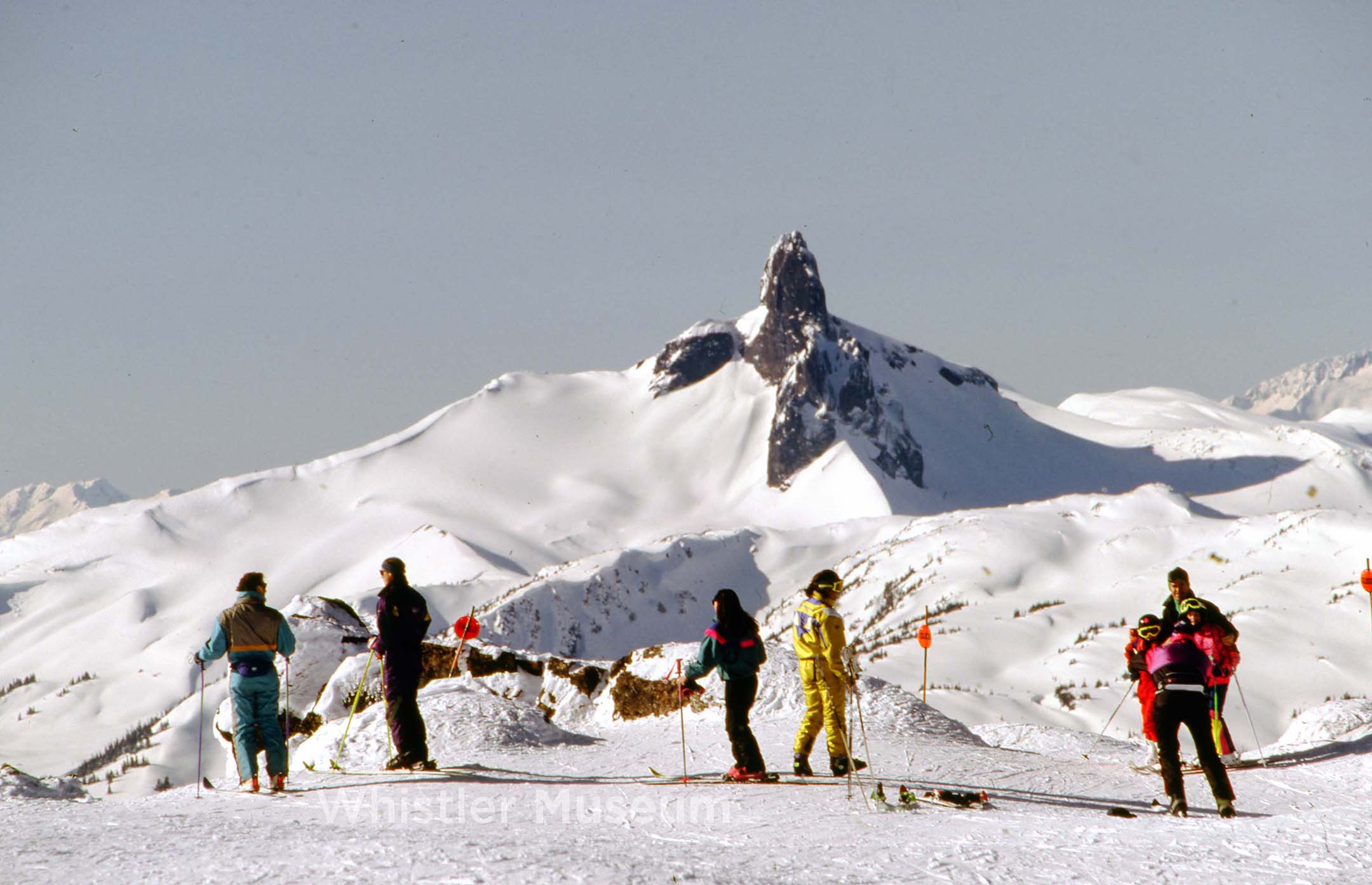
Top Image: Skiers atop Whistler Peak. 1990s. Griffith Collection.

This week marks the 60th anniversary of Whistler Mountain’s opening. Blackcomb Mountain opened in 1980. Whistler’s runs were designed more to side-run the mountain, whereas Blackcomb’s followed more of the fall lines. 

Up until 1997, the two mountains operated separately. There was, however, a Dual Mountain Pass that could be purchased, granting access to both mountains. The pass was one of the only points of collaboration between the two competitors, whose rivalry was best showcased in their alpine lift duel.

In 1985, Blackcomb installed the 7th Heaven T-Bar: at the time, becoming the continent’s first, and only, “Mile High Mountain.” A vast amount of new terrain was opened up by this development – expansive glacial access and four powder bowls – extending Blackcomb’s skiable area by almost two-thirds. The significant upgrade served to dispel its previous uniformity in design. Skiers now could  travel down runs covering 1160 acres, a substantial increase over the previous 420. 

The alpine world had been opened up. 

The mid-1980s, short-lived 7th Heaven T-Bar. Griffith Collection.

A young Mike Douglas (“Godfather of Freeskiing”, filmmaker and founder of the Canadian chapter of Protect Our Winters) described the experience of arriving at the top of 7th Heaven as being “dropped off at the edge of the world.” Nancy Greene (Olympic gold medalist voted Canada’s Female Athlete of the 20th Century) declared “The enormous variety of slopes and spectacular views are unequalled in North America.” In the forefront of those views was Whistler Mountain. 

Whistler responded by countering a year later with the opening of the Peak Chair, a three-seater, one kilometre long lift depositing people just beneath the summit of the mountain at 2182 metres. The bar had literally just been raised (in every sense of the word!), one upping Blackcomb in the process.

Peak Chair was initially restricted to just advanced skiers. Snowboarders, at this time, were still not welcome on the mountain. 

Whistler’s original Peak Chair. Griffith collection.

Challenging, cliffed, corniced and steep terrain characterized the area off the peak. Glaciated bowls and bouldered outcrops earmarked the summit’s geologic geography; whereas, its demography was being populated by seekers-of-skiing’s-extreme.

Blackcomb was not to be outdone. Riding 7th Heaven, arguably, remains the pinnacle of the Blackcomb experience.  The following year, in 1987, 7th Heaven Express opened, replacing the two-year existence of the T-bar. The new four person chair, running along a longer and new lift line is the same one in operation today. Much like the Peak Chair, only skiers were permitted, when both first opened. 

Blackcomb was the first to welcome snowboarders in 1988/89. Whistler followed suit; however, in this case, the mountain was much more reluctant to follow this trend, only opening their slopes to shredders a full year later.

In 1996, the two mountains joined forces, merging under the banner ‘Whistler Blackcomb.’ Continuing the streak of earning international accolades, the united front earned the Number One spot in SKIING Magazine’s ranking of the ‘Top 25 Resorts in North America’ (Tourism Whistler, 2019).

Two years later, Whistler further upgraded access to its alpine summit, with the unveiling of the four-seater, Peak Express. This same high speed, detachable chairlift remains in operation today.

And every morning, the eager and the energetic mingle and gather at the bases of 7th Heaven and Peak Express, awaiting Ski Patrol to finish their avalanche clearance protocols, in a bid to carve fresh tracks through unparalleled terrain.
The duel of the dual mountains – the rivalry of lifts and runs –  may have ended on a financial and marketing level, but preferences ran – and still run – strong between slope-sliders and stylers  as to which side of the mountain they prefer… along with their preferred method of flying down their chosen hill!