
Crafts in the Park 2026

Videos from previous week crafts can be found below.

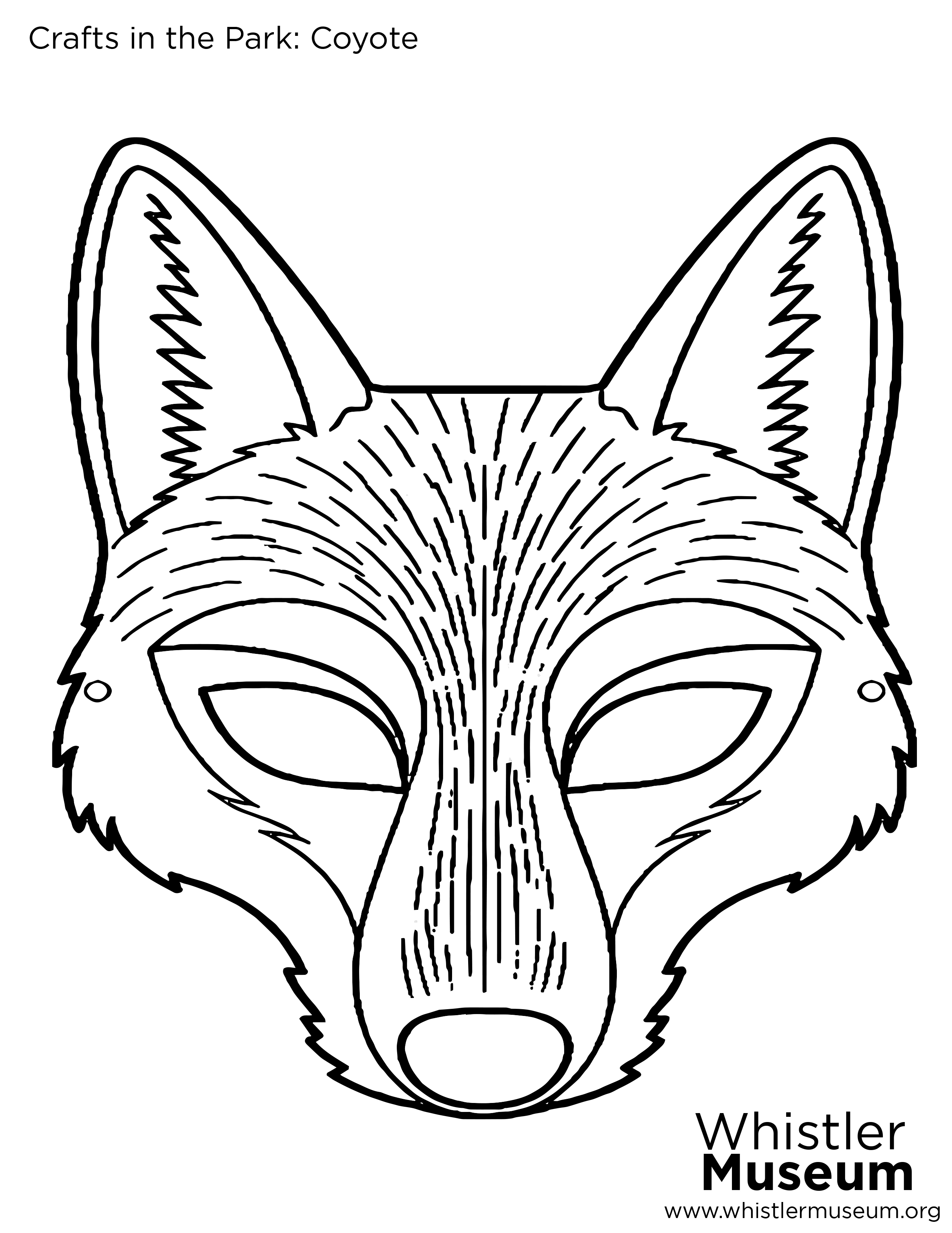
About Coyotes. Coyotes belong to the same animal family as dogs and wolves. They are highly adaptable and can eat a wide variety of foods, including small rodents, insects, berries, and even leftovers left behind by other animals. As scavengers, coyotes play an important role in keeping the environment clean. As more people live and recreate around Whistler, encounters with coyotes have become more common. Coyotes have occasionally been known to follow people in an “escort-like” manner, guiding them out of their territory. This behaviour is more common when people are walking dogs, which coyotes may view as a threat. While coyotes are generally wary of people, they can become accustomed to humans when food is available. Coyotes are wild animals and should always be treated with caution, but there is usually no need to report them unless they are behaving aggressively.
About Western Toads. Western Toads are cold-blooded amphibians, which means they get extra cold in the winter. In the cold months, they will burrow into the ground to keep themselves warm in the dirt below the frost line. Western Toads have been migrating across British Columbia for thousands of years, following the patterns of the glaciers, and many of them end up right here in Whistler. Lost Lake is a very popular destination for these tadpoles to begin their migration. Each spring, female Western Toads will lay up to 16,000 eggs, and in less than two months these tadpoles will be ready to venture out of Lost Lake to the surrounding wetlands and forests. The reason we are doing this craft this week is because in the last few days, these toads have started their migration. Their journeys can take up to four weeks, and visitors can see the toads crossing from the lake to the forest.
Week 2: Make a springing Toad
For this craft, you will need construction paper, a glue stick, and scissors.

Week 3: Make a Pinecone Beaver

About Beavers. Beavers have a rich history of being trapped for their pelts, and in the 1930s, they were nearly hunted to extinction. The Hudson’s Bay Company, the North West Company, and the American Fur Company were the biggest buyers in fur, and the biggest hunters were the Metis. They were especially sought after in Europe, where hats made out of beaver pelts were all the rage. Despite being hunted so thoroughly, beavers persevered. After almost 100 years since beavers were reported to be extinct, research conducted by Bob Brett has found that there are approximately 300-350 beavers living in Whistler today, and most of that is due to the wetlands in Whistler. Beavers and the wetlands sustain each other. The wetlands provide beavers with a safe home to live in, and beavers create dams that control the flow of the water.
About Avalanche Dogs. Dogs are in the same family as wolves and coyotes, meaning they are all very similar. Their longer noses enable them to smell better. In the winter, members of the dog family grow fur between their toes to act as ‘snowshoes’, which also blurs their footprints in the snow. Avalanche dogs have been trained to find people who have been caught in an avalanche, or just need rescuing. Due to a heightened sense of smell and an abundance of energy, these dogs can search a much larger area in much less time than a rescuer can. The history of avalanche dogs in Canada was started with Radar and his owner Bruce Watt. These two began a rigorous training program that led to Radar becoming the first civilian validated avalanche rescue dog. Thanks to Radar and Bruce, there are now 31 certified rescue dogs in Canada, known as the Canadian Avalanche Rescue Dog Association (CARDA). It is important to remember that on the mountain, these dogs are working and must not be treated like regular pets.
Week 5: Make a Bear Bookmark
For this craft, you will need construction paper, scissors, and a gluestick.
About Bears. Whistler is a relatively new community, and before the village was created, these grounds were used as a dump, and were a common place to spot bears. Bears have an extremely heightened sense of smell, and an open dump was a very easy area for them to get their next meal. With the arrival of the village, this sense of smell is a problem that we still have to be wary of to this day. When bears smell food or garbage, they come running. However, this lack of caution around humans makes them seem dangerous, and therefore the rates of unnecessary bear killings are higher than they should be. As long as we keep our food locked up, we can keep the bears safe on their land.
Another fun piece of Whistler history is the story of Teddy. One day, Myrtle Philip heard crying in the woods, and when she went to check it out, she found a small cub abandoned by its mother. She brought this bear cub back with her and named it Teddy. Teddy became a pet around Rainbow lodge, but eventually grew too big, so Myrtle made the decision to send Teddy to the Greater Vancouver Zoo. Teddy had been living with the Philips for quite some time, and would not have been able to survive on his own in the wild. Myrtle visited Teddy multiple times, and she swears he could recognize her in the crowd.