Hope for nature and mental healthHope for nature and mental health

0 Comments

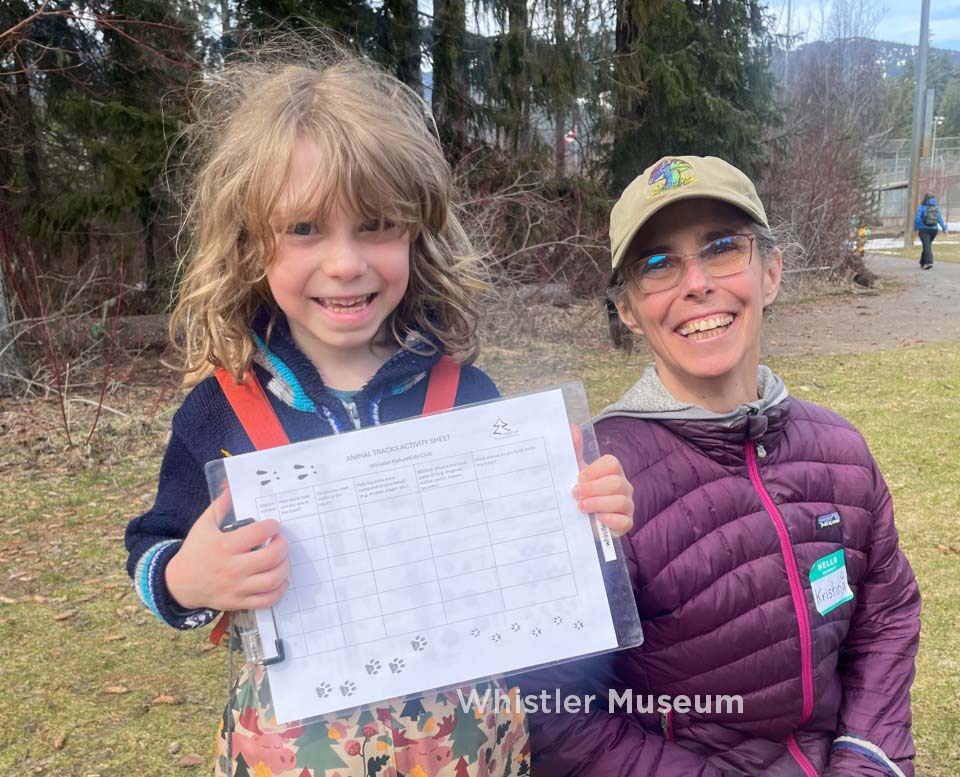
Featured Image: The author with a Whistler NatureKids Club participant. Photo by Ashley Bordignon

Even a wounded world is feeding us. Even a wounded world holds us, giving us moments of wonder and joy. I choose joy over despair. Not because I have my head in the sand, but because joy is what the earth gives me daily and I must return the gift.

-Robin Wall Kimmerer

I believe most Whistler residents care about our more-than-human neighbours, such as bears, birds, and berry bushes. I also realize human-driven environmental harm is causing anxiety for many of us, especially youth. A 2023 study found that 78 per cent of Canadian youth reported climate change impacts their overall mental health. How might we address this?

“The environmental crisis is also a crisis of hope,” says Elin Kelsey, author of Hope Matters. When people feel hopeless, they become apathetic. It’s deeply unfortunate that the media tends to focus on environmental crises, which fuel eco-anxiety and apathy, rather than on evidence-based solutions currently underway.

What brings me hope is nature’s capacity to heal itself. Examples include the steady recovery of the ozone layer and the comeback of humpback whales in the Salish Sea. I’m also inspired by people tackling today’s environmental challenges head-on (for examples, see happyeconews.com). I believe together, we have the power to heal our planet and successfully advocate for our neighbours who cannot.

Kelsey’s book helped me understand that “hope is something we do, not something we wait for.” With that in mind, it’s wonderful to see this community helping young people build relationships with the natural world. When youth are inspired to help nature out of love, it transforms anxiety into empowerment.

More good news: small acts of stewardship can create waves of positive change. Hopeful behaviours to model include those in Whistler’s Climate Change Strategy. Also consider advocating for environmental protection at all levels of government; eating plant-based meals—the single biggest way to reduce our impact; and eco-conscious buying.

Finally, it’s encouraging that Whistler’s Priority Habitat Framework, which includes recommendations to help protect important natural habitats, is available to guide land-use planning at municipal hall.

This is the last in a 10-article series highlighting nature to mark the Resort Municipality of Whistler’s 50th anniversary. Check online for references. Thanks for reading.

The Whistler Museum will continue its long-running Discover Nature program this summer, running at Lost Lake on weekdays in June and July with free, drop-in opportunities to explore Whistler’s unique natural history through hands-on displays and conversations with interpreters. The Museum is also offering A Whistler Nature 101 & Interpretation, a three-day course on May 21, 22, and 28, combining classroom learning, field trips, and hands-on practice. More information is available at whistlermuseum.org.
Stewardship begins with educationStewardship begins with education

0 Comments


By: Kristina Swerhun

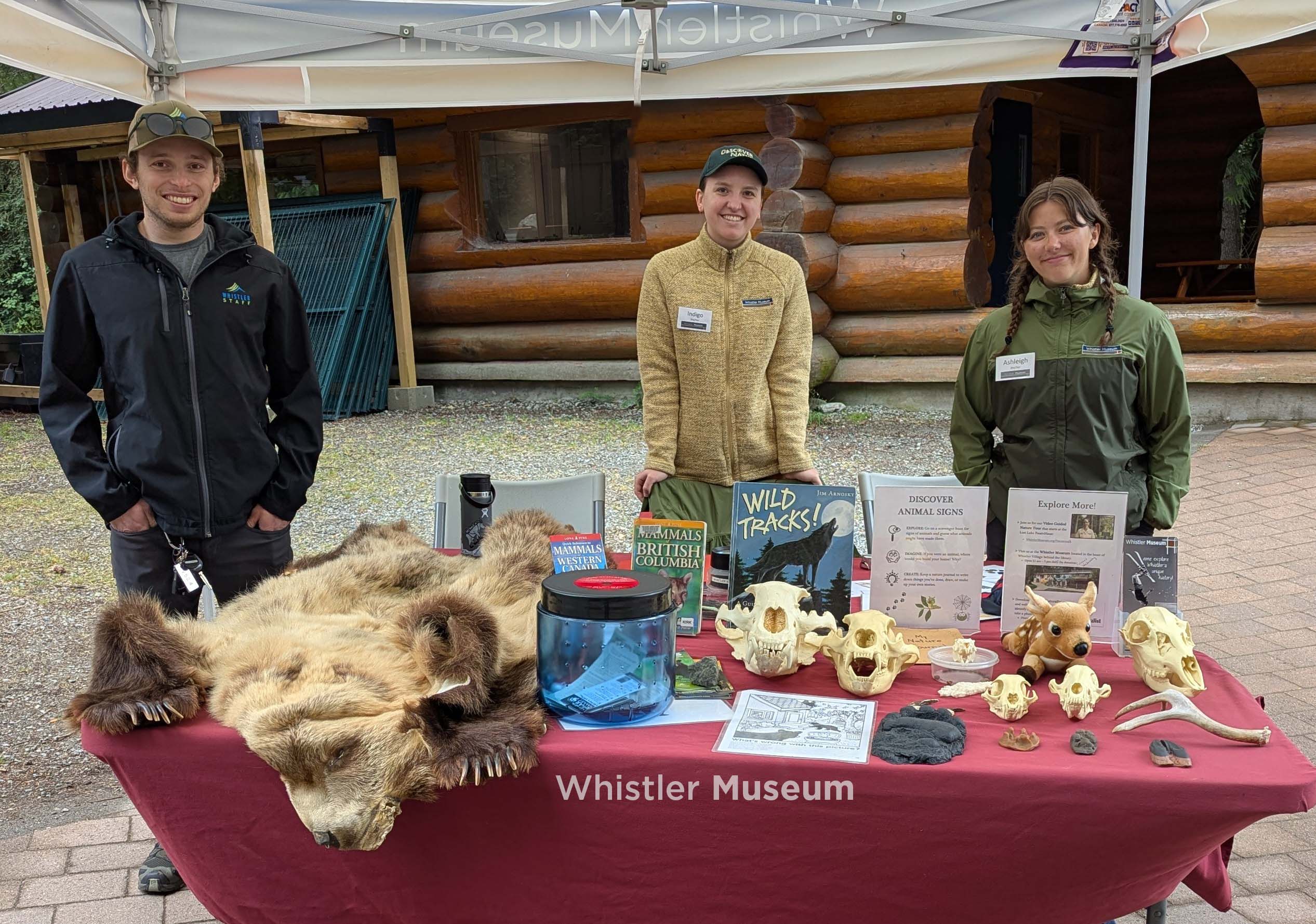
Featured image: Paws and Reflect: The Whistler Museum’s Discover Nature program at Lost
Lake welcomes you in summer.
Photo credit: Kristina Swerhun


“To a person uninstructed in natural history, their forest or lakeside stroll is a walk through a
gallery filled with wonderful works of art, nine-tenths of which have their faces turned to the
wall.” – Thomas Henry Huxley


Whistler’s long-term vision is to be a place where nature is protected. To make this a lasting
transition, I believe we need both top-down government policy and bottom-up community action.
A joyful part of this journey is learning about the wonderful “works of art” we find in nature.
Research confirms nature education leads to understanding, understanding leads to
appreciation, and appreciation leads to stewardship. We’re lucky that Whistler has many
opportunities to learn about nature. Here are some recommendations:


Interpretive Panels: This Municipal initiative fosters a deeper understanding of nature and
heritage. Some 170 panels can be found throughout the valley. Many panels are highlighted in
self-guided tours—Natural Wonders, History & Heritage, Discover Creekside, Cultural
Connector—at Whistler.com/self-guided-tours.


Video Guided Nature Tour: This Whistler Museum tour takes place in Lost Lake Park on the
walking-only trail that starts at the PassivHaus and follows Blackcomb Creek. The tour has 10
stops and explores the species that call Whistler home (a snowshoe pass is required in winter).
WhistlerMuseum.org/NatureWalk


Monthly Bird Walks: These free walks, hosted by the Whistler Naturalists, are open to anyone
interested in learning about birds and contributing as a citizen scientist. Connect with
experienced birders who are happy to share their knowledge. WhistlerNaturalists.ca/Birding
Interpretive Forest Walk: Offered by the Squamish Lil’wat Cultural Centre. This seasonal tour
is set along the Salish Stroll, the Cultural Centre’s forest trail, and immerses guests in the
natural environment while exploring the deep cultural knowledge of the Squamish and Lil’wat
Nations. SLCC.ca/Tours


Discover Nature: This Whistler Museum free drop-in program runs at Lost Lake Park on
weekdays in July and August. Nature interpreters host touch-tables, offering different themes
each day of the week to foster deeper connections between people and the natural world.
WhistlerMuseum.org/DiscoverNature


Whistler NatureKids Club: New in 2025, the Whistler Naturalists have partnered with
NatureKids BC to offer free monthly science-based nature outings for families with kids ages 5
–12. Email Whistler@NatureKidsBC.ca


Whistler 101 Videos: An online series created by the municipality to inspire a deeper
understanding of Whistler. Six episodes highlight biodiversity, geodiversity, indigenous peoples,
history & heritage, climate, and the arts. WhistlerLibrary.ca/learn/Whistler-101
Fire & Ice Aspiring GeoRegion: Will eventually contain some 70 geosites stretching from
Porteau Cove to Mt. Meager. Discover mountain building, glaciation, volcanism, and collapse
at FireAndIceGeoRegion.ca.

NatureSpeak: These nature articles, written by the Whistler Naturalists, currently appear
monthly in The Pique. Going back to 1999, hundreds of past articles are available at
WhistlerNaturalists.ca/NatureSpeak-articles.


Association of Whistler Area Residents for the Environment (AWARE): Protects Whistler’s
natural environment through advocacy on conservation, climate action, and circular economy
practices. AwareWhistler.org


Coast to Cascades Grizzly Bear Initiative: Seeks to protect and recover threatened grizzly
bears and safeguard their habitat in southwest British Columbia through science-based planning
and community involvement. CoastToCascades.org

Just because it was documented, doesn’t mean we have it…Just because it was documented, doesn’t mean we have it…

0 Comments

The archives depends on you: dispelling some misconceptions about the process of building the Museum’s collection

 “Archives are the documentary by-product of human activity retained for their long-term value. […] Like people, archives are diverse,” explains the International Council on Archives.

In simple terms, the archives is a euphemism for a ‘collection of story parts.’

In a recent Pique article, I, the Whistler Museum’s Events and Community Manager, was quoted as saying, “an archive is a living, breathing, exciting thing. ‘Archive’ is a verb.”

The action of the archive, however, is only expanded by donations of materials; adding chapters, pages, periods and punctuation to the make-up of a place… and herein, lies one of the major misunderstandings on how the broadening of our museum collection works.* Just because an event happened and it was photographed, or a document was produced relating to the town in some way – does not automatically mean that we have it.

In short, the archive is infused by gifting. We are dependent on donations This can also mean that the archive can be disproportionately reflective of a place’s demographic. This, too, is true for our Whistler archive.

The Museum’s archive can be viewed as an ever-expanding puzzle; whilst we try to configure matching pieces and identify those missing. The process is equally as diverse as the people and collections who breathe life into it: a reciprocal exchange between gifting and receiving.

The local archive is only made broader — more reflective of those who have, and still do, live here – by donations of material: from physical elements (text, photographs, video/film assets) to non-physical ‘oral histories’ that people come in and record. The Museum’s repository is expanded by people contributing to being part of place-making and meaning. Please never underestimate the value of your experience. The Museum does not have an age limit.

Speakers Series are also a valuable way of documenting reflections and past events, recording our stories through the power of conversations — which add to the record — becoming platforms for thought. Again, I was cited in the same March 20th article by Luke Faulks as saying: “…a museum is an exciting place. Your history sheds light on your present, and it’s a springboard for how we inform our future.”

The Museum invites you to become an active participant and co-creator of our storied happenings by attending one of our events, by volunteering to record your tale or by donating relevant items you may have.

This segues into another often misunderstood element of how the Museum is able to process items received. It’s not instantaneous.

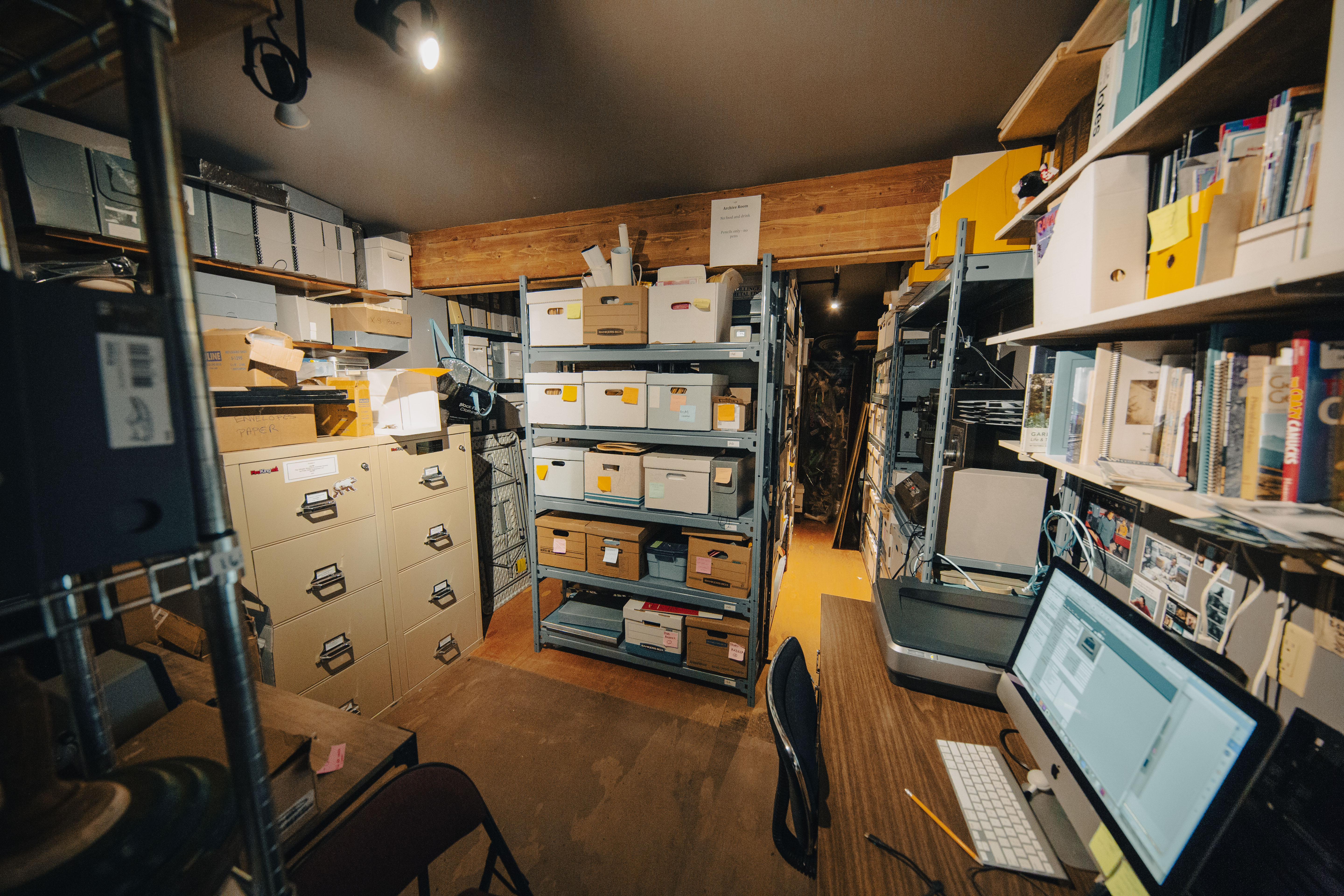
 We are a not-for-profit organization that operates with a small staff of three. Currently, we have an additional person added to the team, hired under contract for the sole purpose of inventorying, appraising, processing (arranging and describing) the donation of the Bruce Rowles 70,000+ photographic collection. This entire process has already taken seven months, working full time, and is still ongoing. Ideally, the last step for archivists is to digitize our collections, which is important for preservation of degrading materials and for easy access to these images. The process is time and labour-intensive. A collection of 20,000 images could take one year to digitize, ensuring it meets Canadian archival standards. It is, however, a donation we are exceedingly happy and grateful to receive: a benefit to the entire community. Bruce wanted to ensure his life’s work would be remembered and appreciated. A selection of his photography will be exhibited at the Whistler Museum from April 24th to June 14th.

As further means of perspective, the Whistler Museum’s entire photographic collection currently exceeds 300, 000 items.  With the addition of the Rowles collection, it will be nearing 400, 000. We have approximately 90, 000 of those items digitized. We try to make many of those items available through a variety of means: from special exhibitions, to being posted on our social media networks, online on our archival database to highlighting them through articles and being featured in events.

The local archives is an expansive and immersive space: infused by your continuous contributions into the building of a pastiche-of-place.

*

*It would be remiss of us not to acknowledge the past wrongs associated with many colonial museum practices: with a legacy of taking, extracting without permission and stealing from Peoples. The Whistler Museum has participated in the repatriating of some items that were donated, that we did not feel were ours to have. Together, we learn through the past how to co-create collaborative futures…

Grief in archives: Handling the collection of photographer, Bruce RowlesGrief in archives: Handling the collection of photographer, Bruce Rowles

0 Comments

By Kat Hodgson

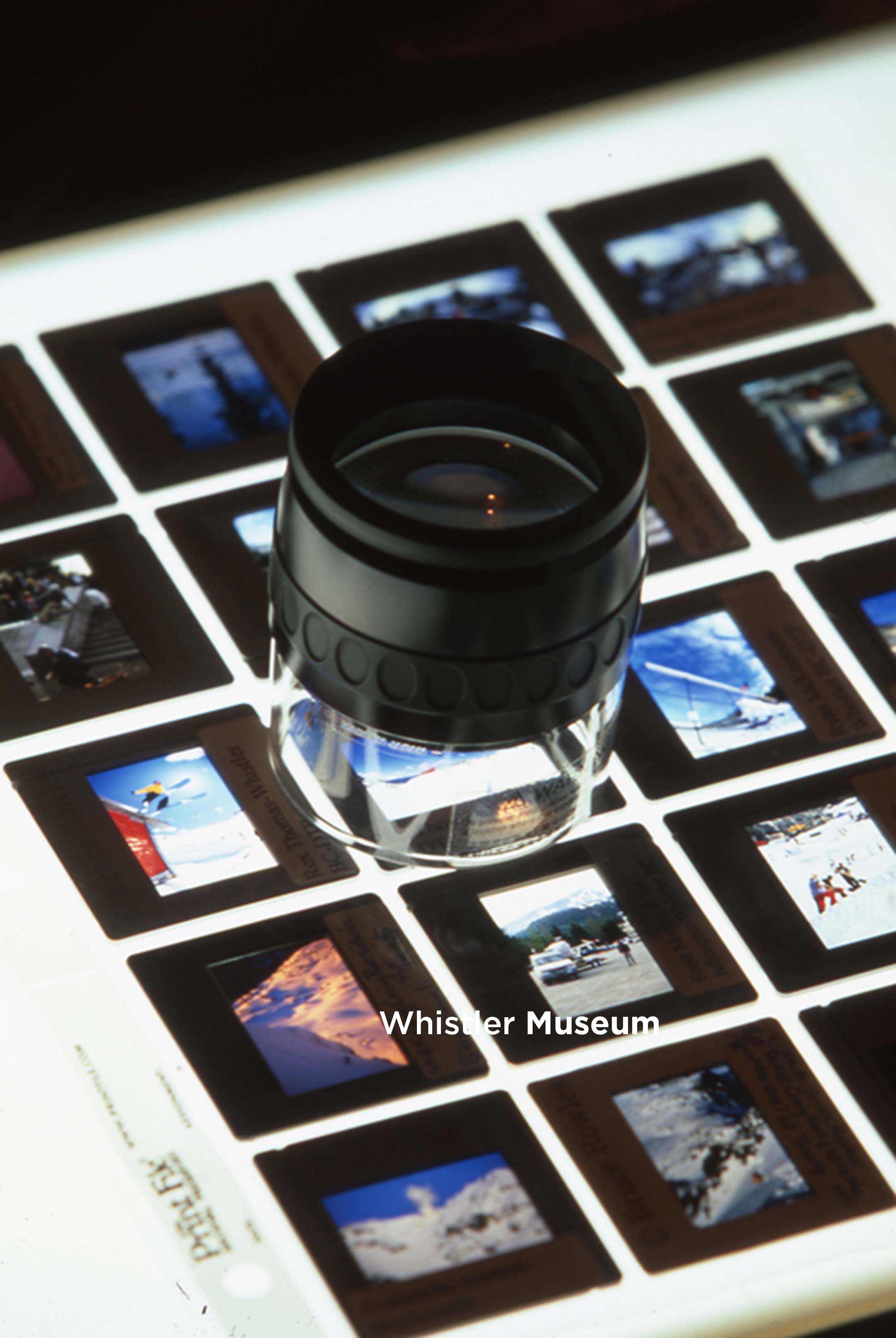
Featured Image: Bruce’s photo of his light table setup to view his slides.

Before beginning my internship at the Whistler Museum, I had never visited the town before. In October 2025, I arrived as an outsider. I also arrived grieving.

The day before I moved, my grandfather suddenly passed away, marking the fourth loss in my family in two years. As I settled into this unfamiliar place, the nerves and excitement that come with a new job and community were tinged with the constant weight of grief. 

This mindset shaped how I approached the project of organizing the Bruce Rowles Collection. This collection of 35mm slides, documents, posters, and much more was generously donated by the family of Bruce Rowles in batches from 2024 to 2026. Comprising over 70,000 slides, it is now the largest photographic collection in the Museum’s archives. Working with it offered me the chance to get to know Whistler as Bruce saw it, while also viewing glimpses of the life behind the camera.

Bruce Rowles, often called Rowlesy by friends and family, was a prolific photographer and artist who spent more than three decades in Whistler. His photographs captured action-filled competitions and wild nightlife scenes, but also contained quieter moments, such as vast landscapes, meals and trips with friends, or photos of plants and insects that he’d found beautiful. Some slides were labelled with quips that let his personality shine through, hinting at the humour and creativity that guided his work.

A wonderful example of one of Bruce’s quips with his commentary on his slides.

For me, the most striking materials in this vast collection are three binders labelled “Lost Friends”. They contain portraits, sports shots, and candid photographs of individuals Bruce had known and later mourned. Nearly every slide is labelled with names and locations, already arranged in archival-safe sleeves as an act of remembrance as much as documentation. In assembling these binders, Bruce preserved not only the images of these people, but also the memories and relationships he had with each of them.

Working with these materials, I came to understand the collection through the lens of grief, both my own and that which he was expressing in each carefully arranged page. Scholars have described this response as “empathic grief”: the emotional weight archivists may feel when encountering records shaped by loss. All records are connected to lives, and often to those who are no longer with us. That persistent connection can make it difficult not to recognize and react to the emotions held in records, requiring the archivist to carry them throughout their work, sometimes even feeling them alongside their creators. 

Bruce’s collection both captures and expresses several positive emotions – celebration, humour, excitement, and curiosity, to name a few – while also making space for absence. Over the past six months, I’ve felt all of them, allowing me to see the world through Bruce’s lens. His careful remembrance of others became, unexpectedly, a reminder that grief is part of the greater act of loving someone. In the midst of my own losses, that perspective helped shift my own grief from being purely painful into something that could also hold gratitude for the privilege of getting to carry memory forward.

Bruce wanted to ensure his life’s work would be remembered and appreciated. A selection of his photography will be exhibited at the Whistler Museum from April 24th to June 14th.

Bruce captures humour with his self-portrait.

Kat Hodgson was the Assistant Archivist at the Whistler Museum this winter through the Young Canada Works in Heritage Organizations (YCWHO) program.