
By: Kristina Swerhun
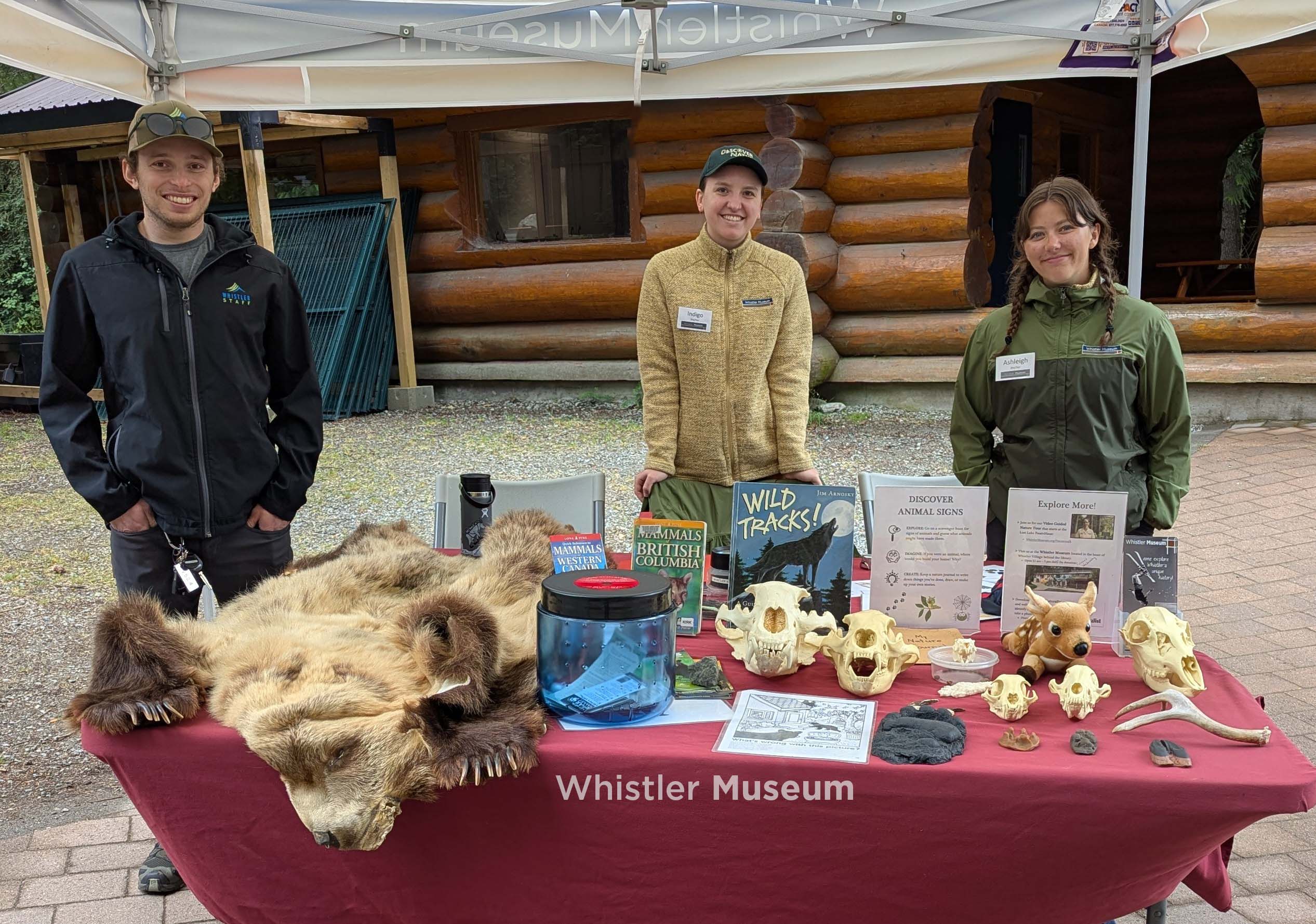
Featured image: Paws and Reflect: The Whistler Museum’s Discover Nature program at Lost
Lake welcomes you in summer.
Photo credit: Kristina Swerhun
“To a person uninstructed in natural history, their forest or lakeside stroll is a walk through a
gallery filled with wonderful works of art, nine-tenths of which have their faces turned to the
wall.” – Thomas Henry Huxley
Whistler’s long-term vision is to be a place where nature is protected. To make this a lasting
transition, I believe we need both top-down government policy and bottom-up community action.
A joyful part of this journey is learning about the wonderful “works of art” we find in nature.
Research confirms nature education leads to understanding, understanding leads to
appreciation, and appreciation leads to stewardship. We’re lucky that Whistler has many
opportunities to learn about nature. Here are some recommendations:
Interpretive Panels: This Municipal initiative fosters a deeper understanding of nature and
heritage. Some 170 panels can be found throughout the valley. Many panels are highlighted in
self-guided tours—Natural Wonders, History & Heritage, Discover Creekside, Cultural
Connector—at Whistler.com/self-guided-tours.
Video Guided Nature Tour: This Whistler Museum tour takes place in Lost Lake Park on the
walking-only trail that starts at the PassivHaus and follows Blackcomb Creek. The tour has 10
stops and explores the species that call Whistler home (a snowshoe pass is required in winter).
WhistlerMuseum.org/NatureWalk
Monthly Bird Walks: These free walks, hosted by the Whistler Naturalists, are open to anyone
interested in learning about birds and contributing as a citizen scientist. Connect with
experienced birders who are happy to share their knowledge. WhistlerNaturalists.ca/Birding
Interpretive Forest Walk: Offered by the Squamish Lil’wat Cultural Centre. This seasonal tour
is set along the Salish Stroll, the Cultural Centre’s forest trail, and immerses guests in the
natural environment while exploring the deep cultural knowledge of the Squamish and Lil’wat
Nations. SLCC.ca/Tours
Discover Nature: This Whistler Museum free drop-in program runs at Lost Lake Park on
weekdays in July and August. Nature interpreters host touch-tables, offering different themes
each day of the week to foster deeper connections between people and the natural world.
WhistlerMuseum.org/DiscoverNature
Whistler NatureKids Club: New in 2025, the Whistler Naturalists have partnered with
NatureKids BC to offer free monthly science-based nature outings for families with kids ages 5
–12. Email Whistler@NatureKidsBC.ca
Whistler 101 Videos: An online series created by the municipality to inspire a deeper
understanding of Whistler. Six episodes highlight biodiversity, geodiversity, indigenous peoples,
history & heritage, climate, and the arts. WhistlerLibrary.ca/learn/Whistler-101
Fire & Ice Aspiring GeoRegion: Will eventually contain some 70 geosites stretching from
Porteau Cove to Mt. Meager. Discover mountain building, glaciation, volcanism, and collapse
at FireAndIceGeoRegion.ca.
NatureSpeak: These nature articles, written by the Whistler Naturalists, currently appear
monthly in The Pique. Going back to 1999, hundreds of past articles are available at
WhistlerNaturalists.ca/NatureSpeak-articles.
Association of Whistler Area Residents for the Environment (AWARE): Protects Whistler’s
natural environment through advocacy on conservation, climate action, and circular economy
practices. AwareWhistler.org
Coast to Cascades Grizzly Bear Initiative: Seeks to protect and recover threatened grizzly
bears and safeguard their habitat in southwest British Columbia through science-based planning
and community involvement. CoastToCascades.org