Dairy Delivery by Dugout: Local Cream and Cow’s Milk Carted by CanoeDairy Delivery by Dugout: Local Cream and Cow’s Milk Carted by Canoe

0 Comments

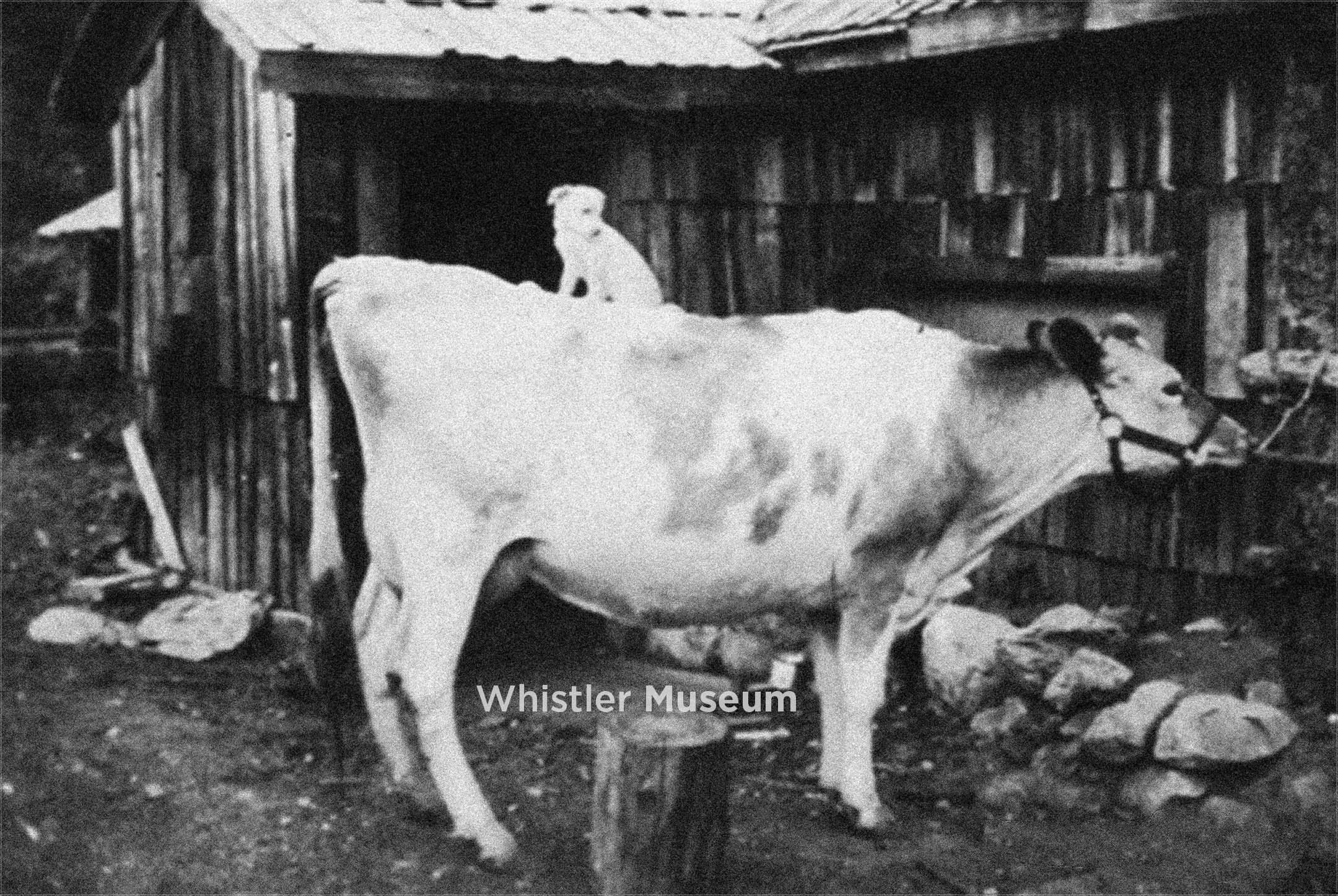
Featured Image: A dairy cow at the Barnfield Farm [1920s]. Whistler Museum Collection.

The lay of the local landscape was much different in the early 1900s. The area’s epicentre was Alta Lake. Prospecting, trapping and logging, followed by fishing and later farming dominated, giving reason and rise to the development of a small community and a handful of lodges in the valley beneath London Mountain. 

London Mountain (since renamed Whistler) likely earned the named due to a group of original prospectors who formed The London Group in 1903. One of those early prospectors was Alfred Barnfield. 

Barnfield left London, England, arriving in Squamish in 1886 or 1887. He was later hired to inspect the length of the Pemberton Trail. The rough route ran from Burrard Inlet to Squamish up through the area now known as the Whistler Valley northward to Pemberton and onto Lillooet. First developed with the intention to access the Interior’s goldrush and as a cattle trail, the route was completed in 1887. It remained the only way to access Alta Lake (then called Summit, but renamed for the purposes of mail delivery, for there were too many Summit Lakes in the province, with the establishment of the area’s first Post Office in 1915) up until the arrival of the Pacific Great Eastern Railway in 1914. It was through Barnfield’s inspection that he first came to visit the shores of the lake where he would establish a farm some years later. 

Barnfield returned to Alta Lake, pre-empting 160 acres of Crown Land on its northeast end, in 1905. Pre-emption was a practice common in British Columbia in the late 1800s to early 1900s, which allowed settlers to acquire Crown Land for development and agriculture. After improving it, the land could be purchased at a low price. As per the agreement with the government, Barnfield was required to build a cabin and clear a portion of the land. To do so, he backpacked building supplies over the Pemberton Trail from Squamish.

Barnfield continued to prospect with the London Group, staking claims in the Garibaldi/Black Tusk area.

On August 1, 1910 Alfred Barnfield married Daisy Hotchkiss. He was 42, she was 19. Despite the age difference, the marriage appeared to be a loving one and the two raised four children. 

The Barnfield Farm had 14 cows at the peak of its production, chickens and a few pigs. Alta Lake was becoming a fishing destination with the opening of Rainbow Lodge in 1915 and subsequent establishments opening up around Alta lake. The Barnfield family’s farm was able to fulfill a local much-appreciated-niche: daily fresh milk and cream delivery. They fulfilled orders by dugout canoe. Groceries and dry staples were able to be delivered by train, coming north from Vancouver; however, fresh dairy demanded local production. In a 1993 interview with the Museum, Alfred’s daughter Vera, reminiscessed about how he made his deliveries every day, even when the weather was questionable. “He never missed a morning and sometimes it would be so stormy he just couldn’t hardly make that canoe go.”  Whatever the weather, Alfred would end his deliveries with a visit to Rainbow Lodge, where he would be brought up to date on all the local gossip of the burgeoning lake community … which would then be repeated and rowed around!

Rainbow Lodge was the largest customer of the Barnfield Farm, reputedly purchasing 80 quarts of milk, four quarts of whipping cream and two quarts of table cream daily for their guests.

The Barnfields moved their farm operation to Brakendale in 1926. However, every summer, they continued to load their cows and chickens onto the Pacific Great Eastern Railway (PGE) and travel north to Alta Lake. How long they continued this practice is unconfirmed, however the Barnfields did maintain full ownership of their quarter-section up until the 1970s. 

Alfred Barnfield passed away in 1960, shortly after celebrating his 50th wedding anniversary to Daisy, who passed in 1980. 

In the early 1970s, the bulk of the property was sold for the development of the Whistler Cay subdivision and Adventures West. Small lots were left to the three remaining Barnfield children (one died in WWII). The remaining 1 ⅓ acres was sold in 1988, becoming ‘Barnfield Place’, a nod to the legacy of initial local land development.
The Four-Wheel ForceThe Four-Wheel Force

0 Comments

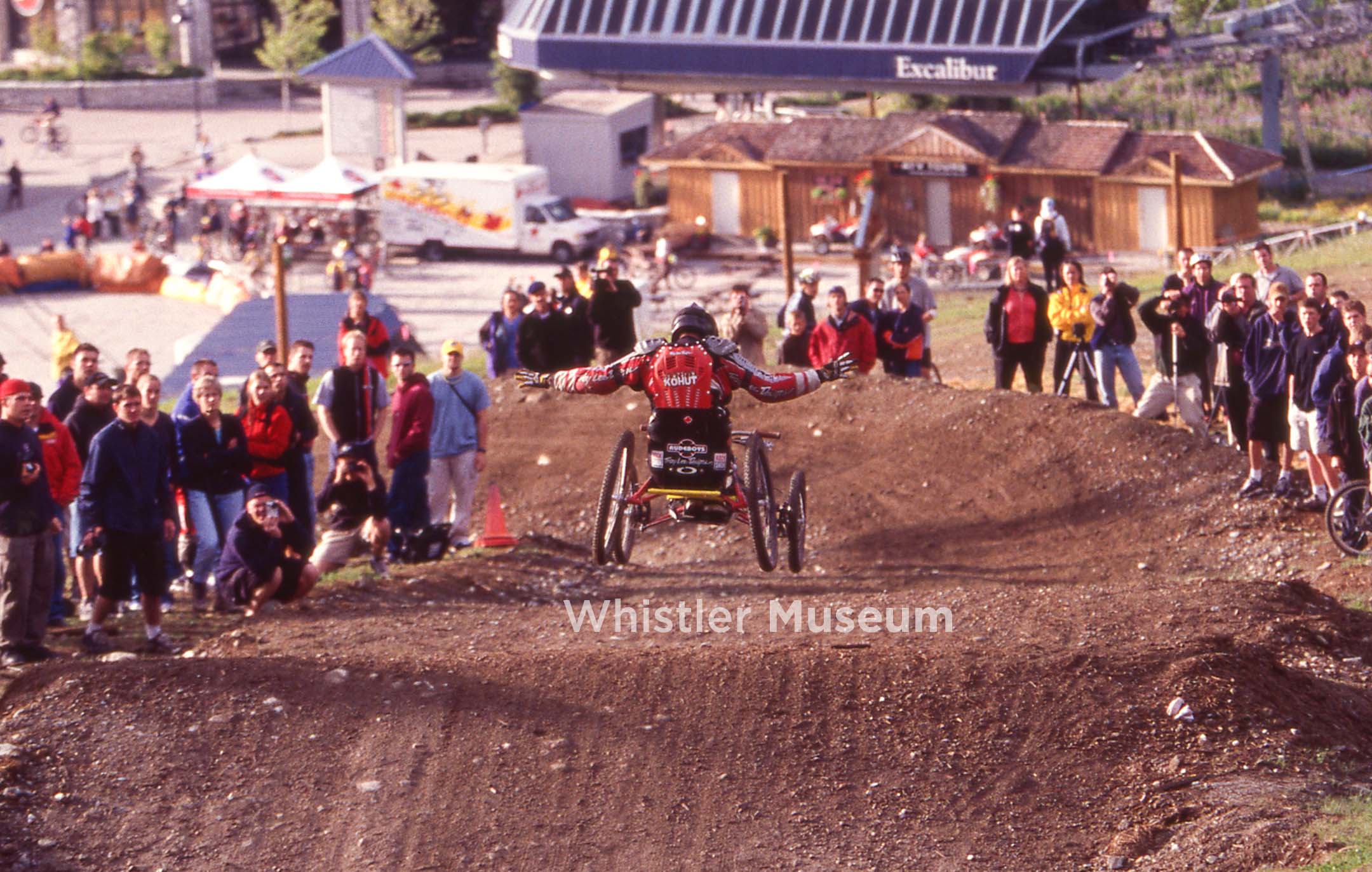
Featured Image: Kohut in the Whistler Bike Park, in 2000. Whistler Museum/Insight Photography Collection.

May 15 marks Opening Day of the Whistler Bike Park. For Kohut, the day marks the start of his 26th season riding the park.

“In ‘92, I originally saw a picture of someone riding a four-wheel bike.” Kohut wanted one. Badly.

“I had to wait until 1999 to get my first four-wheel bike. Seven years it took. Seven years of winning gold medals. Seven years of being in the paper. Seven years of being on the TV. Seven years of pouring my heart into just being a real, true, integrated individual.”

Those seven years followed a life-changing accident. At age 21, Kohut broke his back attempting a “super-loop” on a swing set. Within a year, he was back skiing. By 23, he had become “Canada’s first-ever gold medalist in sit-skiing”. In 1996, he won the World Championship of Disabled Skiing in Austria, followed by three silver medals at the 1998 Paralympic Winter Games in Nagano.

“It’s all about being quick. And looking good. Being good.” Following that, Kohut came to Whistler and spent almost a month just shredding the snowboard park and half pipe. “You gotta pay your dues with pain, blood, tears, and a tremendous amount of determination to attempt the trick, fall, get up. Attempt the trick, fall, to get up. That method is exactly why I’m successful.”

In 1999, Kohut also quit the National Ski Team. He did return for one last Paralympics in 2002 in Salt Lake, but has not been on snow since 2003. His focus since then has been solely on biking. In 2017, Red Bull called him “the world’s fastest mountain biker on four wheels.” The year following the acquisition of his bike, he was competing in an American national downhill race. Without question, an able-bodied one.

 In 2000, he was competing in Whistler.  “ it’s announced that starting next year, the bike park is going to be open for five and a half months. … Well, all the dudes that were sitting with me were like, holy @#$%. We can do it. We can become the world’s first bike bums.” And that’s exactly what Kohut proceeded to become when he moved full-time to Whistler.

“That’s what I am. I’m a bonafide park rat. I was a skate park rat. I was a BMX track park rat. I’m a downhill park rat.” He continues, “We don’t adaptive bike. We don’t handicap bike. We have bikes that are four wheels. You can call it a four-wheel bike or a four-cross and that’s that.”

Kohut is a pioneer. Not by choice, but by default, he is also an advocate. “I’m anti adaptive. I can’t do any of it. … I’m a big proponent of having no more Paralympics. I just think the Paralympics should be blended into the Olympics. … Same day. Same discussion.” Locally, “the people that I owe so much to is people like Phil Chu and Linda Chizik,” prominent Whistler athletes.

The 55-year-old Kohut was born and raised in Calgary, Alberta. “My heroes are like dirtbags… They’re rock and roll musicians. They’re punk rockers.” Kohut fondly reflects,  “Daddy was a Top Fuel drag racer, Mama was bleach blonde. My whole life has never been normal, everything was cool, I didn’t miss out on anything.”

With 25 previous seasons in the bike park, Kohut knows a thing or two about preparation and approach. “I do 100 B-Lines every year before I go on any other trail.” He rides a minimum of three-and-a-half days a week – sometimes seven – and aims for 10 runs a day.

“it’s so fun to race yourself,” he claims. “I don’t work on my weak skills. I cash in on my strengths.”

Kohut is both motivated and a motivator. “I’m pulling the rope that everyone else should be pulling and that’s to make this town as best as it can, as inclusive as it can, as friendly as you can, and let’s just get people from all over the world to come here to shred and be stoked.” 

40 years from now, “I’m going to be the 95-year-old guy that’s doing one run a day.” He will likely also be the first in line.

Hope for nature and mental healthHope for nature and mental health

0 Comments

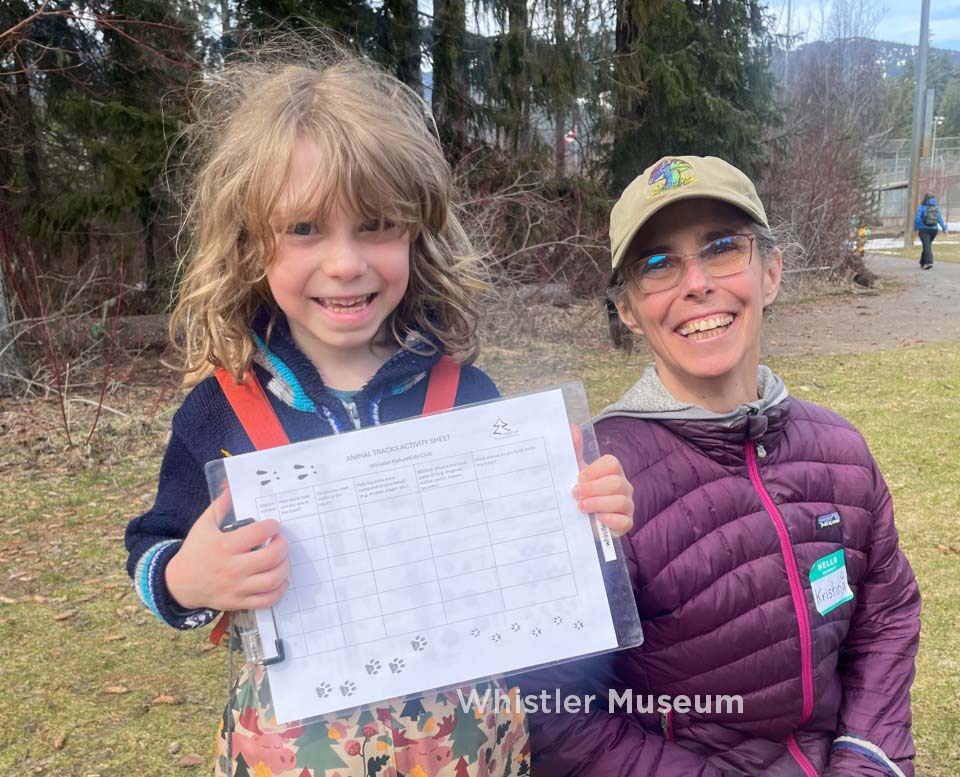
Featured Image: The author with a Whistler NatureKids Club participant. Photo by Ashley Bordignon

Even a wounded world is feeding us. Even a wounded world holds us, giving us moments of wonder and joy. I choose joy over despair. Not because I have my head in the sand, but because joy is what the earth gives me daily and I must return the gift.

-Robin Wall Kimmerer

I believe most Whistler residents care about our more-than-human neighbours, such as bears, birds, and berry bushes. I also realize human-driven environmental harm is causing anxiety for many of us, especially youth. A 2023 study found that 78 per cent of Canadian youth reported climate change impacts their overall mental health. How might we address this?

“The environmental crisis is also a crisis of hope,” says Elin Kelsey, author of Hope Matters. When people feel hopeless, they become apathetic. It’s deeply unfortunate that the media tends to focus on environmental crises, which fuel eco-anxiety and apathy, rather than on evidence-based solutions currently underway.

What brings me hope is nature’s capacity to heal itself. Examples include the steady recovery of the ozone layer and the comeback of humpback whales in the Salish Sea. I’m also inspired by people tackling today’s environmental challenges head-on (for examples, see happyeconews.com). I believe together, we have the power to heal our planet and successfully advocate for our neighbours who cannot.

Kelsey’s book helped me understand that “hope is something we do, not something we wait for.” With that in mind, it’s wonderful to see this community helping young people build relationships with the natural world. When youth are inspired to help nature out of love, it transforms anxiety into empowerment.

More good news: small acts of stewardship can create waves of positive change. Hopeful behaviours to model include those in Whistler’s Climate Change Strategy. Also consider advocating for environmental protection at all levels of government; eating plant-based meals—the single biggest way to reduce our impact; and eco-conscious buying.

Finally, it’s encouraging that Whistler’s Priority Habitat Framework, which includes recommendations to help protect important natural habitats, is available to guide land-use planning at municipal hall.

This is the last in a 10-article series highlighting nature to mark the Resort Municipality of Whistler’s 50th anniversary. Check online for references. Thanks for reading.

The Whistler Museum will continue its long-running Discover Nature program this summer, running at Lost Lake on weekdays in June and July with free, drop-in opportunities to explore Whistler’s unique natural history through hands-on displays and conversations with interpreters. The Museum is also offering A Whistler Nature 101 & Interpretation, a three-day course on May 21, 22, and 28, combining classroom learning, field trips, and hands-on practice. More information is available at whistlermuseum.org.

Stewardship begins with educationStewardship begins with education

0 Comments


By: Kristina Swerhun

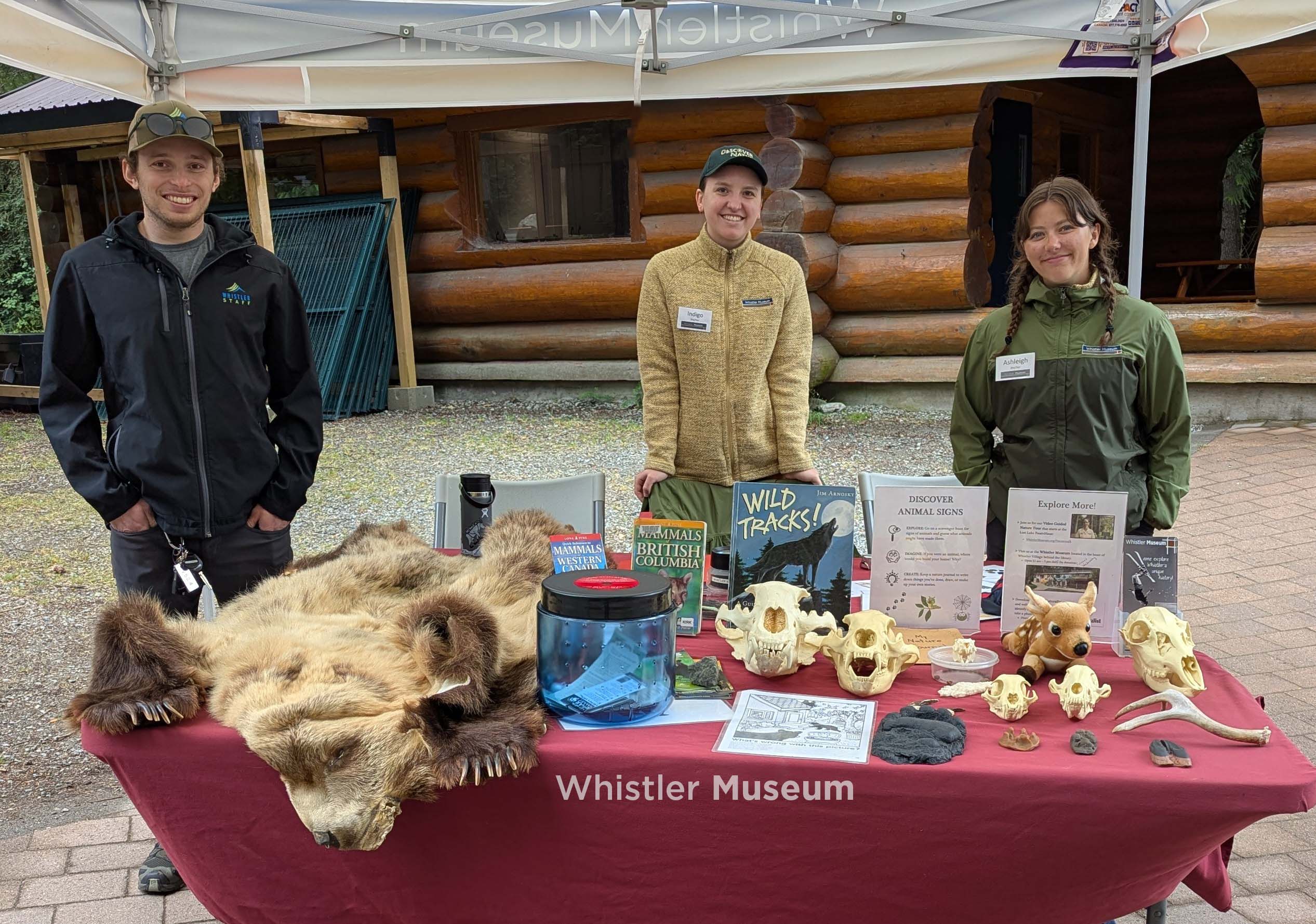
Featured image: Paws and Reflect: The Whistler Museum’s Discover Nature program at Lost
Lake welcomes you in summer.
Photo credit: Kristina Swerhun


“To a person uninstructed in natural history, their forest or lakeside stroll is a walk through a
gallery filled with wonderful works of art, nine-tenths of which have their faces turned to the
wall.” – Thomas Henry Huxley


Whistler’s long-term vision is to be a place where nature is protected. To make this a lasting
transition, I believe we need both top-down government policy and bottom-up community action.
A joyful part of this journey is learning about the wonderful “works of art” we find in nature.
Research confirms nature education leads to understanding, understanding leads to
appreciation, and appreciation leads to stewardship. We’re lucky that Whistler has many
opportunities to learn about nature. Here are some recommendations:


Interpretive Panels: This Municipal initiative fosters a deeper understanding of nature and
heritage. Some 170 panels can be found throughout the valley. Many panels are highlighted in
self-guided tours—Natural Wonders, History & Heritage, Discover Creekside, Cultural
Connector—at Whistler.com/self-guided-tours.


Video Guided Nature Tour: This Whistler Museum tour takes place in Lost Lake Park on the
walking-only trail that starts at the PassivHaus and follows Blackcomb Creek. The tour has 10
stops and explores the species that call Whistler home (a snowshoe pass is required in winter).
WhistlerMuseum.org/NatureWalk


Monthly Bird Walks: These free walks, hosted by the Whistler Naturalists, are open to anyone
interested in learning about birds and contributing as a citizen scientist. Connect with
experienced birders who are happy to share their knowledge. WhistlerNaturalists.ca/Birding
Interpretive Forest Walk: Offered by the Squamish Lil’wat Cultural Centre. This seasonal tour
is set along the Salish Stroll, the Cultural Centre’s forest trail, and immerses guests in the
natural environment while exploring the deep cultural knowledge of the Squamish and Lil’wat
Nations. SLCC.ca/Tours


Discover Nature: This Whistler Museum free drop-in program runs at Lost Lake Park on
weekdays in July and August. Nature interpreters host touch-tables, offering different themes
each day of the week to foster deeper connections between people and the natural world.
WhistlerMuseum.org/DiscoverNature


Whistler NatureKids Club: New in 2025, the Whistler Naturalists have partnered with
NatureKids BC to offer free monthly science-based nature outings for families with kids ages 5
–12. Email Whistler@NatureKidsBC.ca


Whistler 101 Videos: An online series created by the municipality to inspire a deeper
understanding of Whistler. Six episodes highlight biodiversity, geodiversity, indigenous peoples,
history & heritage, climate, and the arts. WhistlerLibrary.ca/learn/Whistler-101
Fire & Ice Aspiring GeoRegion: Will eventually contain some 70 geosites stretching from
Porteau Cove to Mt. Meager. Discover mountain building, glaciation, volcanism, and collapse
at FireAndIceGeoRegion.ca.

NatureSpeak: These nature articles, written by the Whistler Naturalists, currently appear
monthly in The Pique. Going back to 1999, hundreds of past articles are available at
WhistlerNaturalists.ca/NatureSpeak-articles.


Association of Whistler Area Residents for the Environment (AWARE): Protects Whistler’s
natural environment through advocacy on conservation, climate action, and circular economy
practices. AwareWhistler.org


Coast to Cascades Grizzly Bear Initiative: Seeks to protect and recover threatened grizzly
bears and safeguard their habitat in southwest British Columbia through science-based planning
and community involvement. CoastToCascades.org