Tag: Whistler Museum

November Speaker Series: Johnny “Foon” Chilton and “The Energy of the Mountains”November Speaker Series: Johnny “Foon” Chilton and “The Energy of the Mountains”

0 Comments


While there are dozens of different reasons why people love the mountains, for the most part they boil down to one thing: energy. Whether it’s the raw, encompassing power of mountain environments, the vitality one feels when immersed in the alpine, or even the myriad spiritual associations that have been made with these sublime landscapes, the mountains’ unique  energy is undeniable.

It’s also infectious, a fact made apparent when you speak to Johnny “Foon” Chilton. This November 16th the prolific Pemberton-based ski-mountaineer will be sharing his passion for the mountains at the Whistler Museum as part of our monthly Speaker Series.

Johnny at Mount Fee, mid-nineties.

Skiing professionally for nearly two decades Chilton has racked up dozens of first descents throughout B.C.’s Coast Mountains. Two years ago Chilton embarked upon his latest mountain adventure, one that sees him on the opposite end of the ski-industry spectrum.

A cabinet-maker by trade, Chilton began handcrafting skis designed specifically for the Coast Mountains’ legendary terrain, as well as the discerning tastes of their hard-charging skiers. What’s more, all the wood in Foon’s skis comes from trees grown right here in the Coast Mountains.

The end product is an extension of Johnny’s conviction that when it comes to ski design, soul is just as crucial as sidecut, Here’s his take on the inspiration for Foon Skis’ compelling life-cycle:

The mountains are alive; alive as a greater organism.  We, like the trees and animals that live on the mountains, are a part of THEM. Not the other way around. And as such I have been inspired to make skis that are part of the mountains, made from the trees of B.C.’s Coast mountains with the hands and the energy of a man from B.C.’s Coast mountains.

Drawing from his first-hand knowledge of the history of coastal ski mountaineering, Chilton’s aim for the talk is to inspire and share what the mountains mean to him. Expect a presentation full of drama, passion, and amazing photos, and expect to leave energized for another winter of mountain adventure.
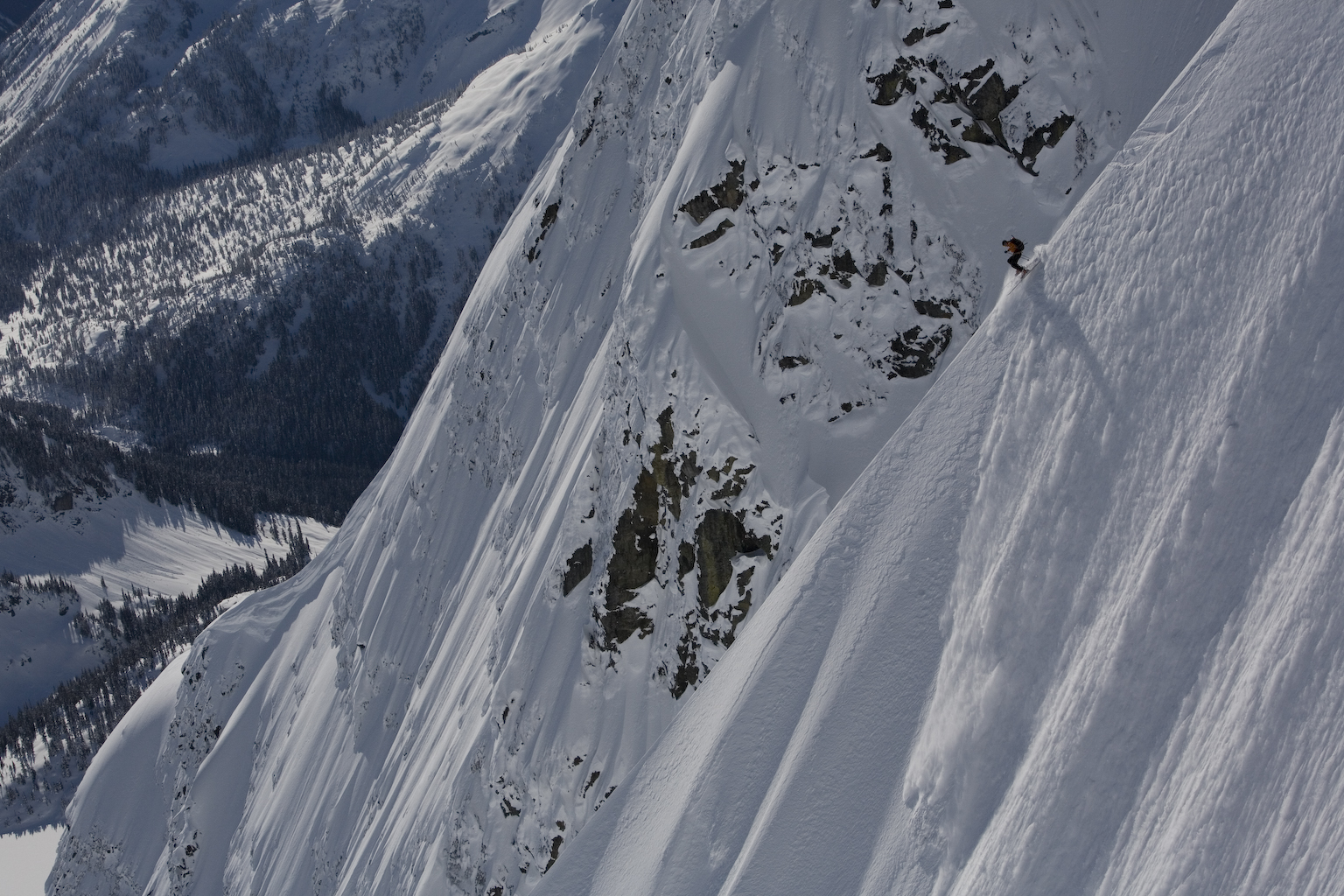
Johnny skiing Mount Howard, in the Duffey Lake region of the Coast Mountains.

Advanced ticket purchase is recommended, as capacity for this event is limited to 50. Tickets are available for purchase at the Museum, or by calling 604-932-2019.

Sign up to our Facebook event page here.

Complimentary tea & coffee courtesy of Whistler Roasting Company will be provided, and there will be a cash bar as well.                                                      

The Whistler Museum Speaker Series is an ongoing series of presentations covering a wide variety of topics related to mountain history, culture, and environment, travel, and adventure. Presentations are held in the evening at the Museum. It occurs on the third Wednesday of most months.

Icon Gone: The Battle for Whistler’s Soul!Icon Gone: The Battle for Whistler’s Soul!

0 Comments

It’s no secret. You hear it all the time in other B.C. ski towns, but it’s a common criticism around these parts too. Whistler has no soul.

Whether or not you agree, Whistler has clearly had a relatively short, though turbulent history. As a result you will find widely varying opinions on topics such as our shared heritage, our sense of community, our cultural icons. Such concerns lie at the heart of the Whistler Museum’s annual community celebration, Icon Gone, which returns for round five this Sunday at the GLC.

The 2008 competitors.

The format is simple: eight prominent Whistlerites get up on stage to make the case for a Whistler “Icon” about which they are especially passionate. Using a competitive format, with liberal helpings of feisty smack-talk and audience participation, a champion is crowned.

The event’s initial inspiration came in 2007 following the loss of a few Whistler icons, most notably our beloved Boot Pub. Incidentally, the Boot’s iconic status will be defended at this year’s Icon Gone by local performing arts Renaissance woman Angie Nolan, with assistance from Village Host head honcho Cathie Coyle.

“The Locals’ Living Room”

We all miss the boot, but such reminiscence begs the question, are Whistler’s icons all gone? Has Whistler sold out? Or, to paraphrase Mark Twain, have rumours of Whistler’s demise been greatly exaggerated?

No matter your opinion, this year’s Icon Gone line-up has something for you.

There will be something for you cynics, for whom reveling in the nostalgia of Whistler’s “Golden Era” (however defined) serves as a cathartic rejection of this would-be wonderland that has apparently lost its way.

If you value the role that sharing and preserving stories play in building our sense of community, then Hi Brooks’ heartfelt dedication to the loved one’s we have all lost to the mountains is sure to pull at your heartstrings.

Needing an “Iconic” cover for their 5th anniversary issue, Mountain Life Mag designed this cool photo collage of Rabbit.

If you feel that beyond the mountains, the snow, the facilities, and the hype, it’s the characters that make this place special, then you can’t miss Jessica “Pika” Turner tribute to her father “Rabbit” Whistler’s quintessential ski bum, or self-described “political hack” Jackson Crompton’s musical homage to Jeanie the Bear.

Cherish Whistler’s contrarian nature? Kevin Damaskie returns on behalf of the iconoclastic Whistler Answer.

Remember Stephen Vogler’s 2007 Icon Gone-winning story about the “secret” meaning of the “G” in GLC? (hint: it was gravity) Well realtor-extraordinaire Stephanie Sloan is here to set the record straight with the real meaning, and the story is just as cool.

If you’re looking for a surprise, Chris Quinlan has chosen to play his hand close to his chest. His Icon remains top secret.

If you need a break from all the bickering in local newspapers, facebook pages, and coffee shops for an evening, and simply want to have a laugh at the expense of our ridiculous community (it is after all, important to stop for a laugh when things get too serious), then Jamie Bond has your fix.

Did you know that Jamie’s Icon, Gaper Day–everyone’s favourite year-end ski circus–has been proving that Whistler’s free spirit is alive and well for fifteen years? Here’s some proof:

Or if you’re simply looking to be reminded of what makes this town great, you’ll get eight compelling examples presented by our passionate, outspoken competitors.

Icons—our shared experiences, cherished landmarks, and beloved neighbours—are the essence of our identity, the difference between a collection of people and a real community. So what are Whistler’s greatest icons? Do we even have any left? Come with an opinion, and come prepared to laugh, cheer, maybe even cry at one of the few events that can truly claim to be “history in the making.”

***

Details:

Brought to you by the generous support of the Province of B.C., The Garibaldi Lifts Company, Whistler Foto Source, Araxi, and Sushi Village.

Neal Carter climbing albumNeal Carter climbing album

6 Comments

Among the tens of thousands of historical photos that the Whistler Museum holds in our archives, I think Neal Carters’ are my favourites. Carter was one of the most prolific mountaineers on the BC Coast during the 1920s and 1930s, gaining several first ascents. He also managed to turn his climbing hobby into a career, working as a surveyor first on Hydro crews around Garibaldi Lake, and then playing a major role in creating the first official topographic map of Garibaldi Park in 1928.

The mountains immediately surrounding Whistler were of special interest to him. Not only did he personally map much of the area (original copies of his massive topo map are in the Vancouver City and BC Provincial Archives), he was also instrumental in convincing the Provincial Government to expand Garibaldi Park in 1928 to approximately its current boundaries, including the Spearhead Range and the Wedge groups of peaks.

His first excursion into our local mountains occurred in September 1923 when he, along with fellow Vancouver climber Charles Townsend, spent two weeks bagging first ascents in the region. Beyond the sheer joy of two weeks climbing in such sublime terrain, the two were also on the lookout for potential sites for future BC Mountaineering Club summer camps, which had been held almost exclusively in Black Tusk Meadows for the last decade.

Their first night’s camp on the flanks of Wedge. Tent pole technology has come a long way in the last 88 years.

Using Rainbow Lodge as their base (they gave Myrtle Philip copies of their photos from this trip, which is how the museum ended up with them) they first scrambled up Wedge Creek with a week’s worth of provisions. Townsend’s very matter-of-fact account printed in the BC Mountaineer belies their huge, gruelling days of bushwacking, navigating crevasse mazes, and scrambling up terribly steep and loose talus slopes in uncharted terrain.

The view south from Wedge to our familiar W-B backcountry: (l to r) Overlord, Pattison, Fissile, Trorey, Davidson, Castle Towers and Decker.

They managed to bag the first ascents of the twin giants of Wedge Mountain and Mount James Turner (whose summit was almost too small to build a cairn), while surveying and naming many of the surrounding peaks and glaciers, over seven days. Along the way they were treated to remarkably clear conditions, which, combined with Carter’s substantial technical skills as a photographer (crucial for accurate topographic surveys), produced some striking images of the surrounding landscape.

Returning back to Rainbow Lodge, they revelled in a massive dinner and comfortable night’s sleep in a bed, but were back at it early the next morning heading for the “largely unexplored” Spearhead Range. They first headed for Singing Pass-then known as “Avalanche Pass” and spent a night in the prospector’s cabin.

Impressive solitude near Whistler’s peak.
Getting radical near Mt. James Turner.

The rest of that week was spent climbing surrounding peaks such as Fissile (then known as Red Mountain), Overlord, and a further excursion for the first ascents of Mount Diavolo, which they named for their difficult experience on its steep and exposed north ridge.

This is just a small sample from more than fifty photos in our collection that Carter produced over the two-week dream trip. Most of them are beautiful in their own right, but are just as interesting as a unique perspective on a landscape that has become so familiar to us. Scanning through the images, you get a sense of Carter’s excitement and wonder as he peered out over vast expanse of completely undeveloped, largely unknown terrain.

Power Up!Power Up!

0 Comments

Throughout BC we are blessed with an abundance of mighty rivers from which we get almost 90% of our electricity. Here in Whistler we’re surrounded by hydro-generating stations of all sizes, notably the IPP on Fitzsimmons Creek which provides for all of Whistler-Blackcomb’s electricity needs. [Correction – it produces the equivalent of all W-B’s electricity needs, but the power is sent to the province’s main power grid.]

A helpful little diagram of W-B’s Fitzsimmons Creek hydro-electricity plant.

Considering this natural bounty, it’s hard to believe that a mere 50 years ago Alta Lake residents had still not entered the modern electric era.

As Whistlerites have always been wont to do, a few residents took matters into their own hands. Bob Williamson installed a small wind-powered turbine at the south end of Alta Lake but it could only power a few lights when the wind picked up. Dick Fairhurst was more successful with the water-wheel and generator he installed on Scotia Creek in 1954, providing steady, reliable power for his Cypress Lodge (the old hostel building next to Rainbow Park). In later years the Philips had also purchased a gas-powered generator for Rainbow Lodge. But aside from these few enterprising DIY-ers, Alta Lake residents continued on with pre-electric living.

Alta Lake resident Bob Williamson working on a power line, circa 1940s.

Heating was mostly from firewood (some residents had oil or coal-burning furnaces) and bed-time reading was done by candlelight or gas lantern. Refrigeration was accomplished in sheds full of thick ice blocks cut from Alta Lake in winter and insulated through the summer with sawdust from local mills.

This lack of hydro service must have been especially frustrating since high-voltage transmission lines ran through the valley as early as the 1930s, linking the Bridge River Hydro dam to Vancouver. At the same time there were plenty of plans for more hydro-development closer to home, including dams at Garibaldi Lake, Cheakamus Lake, on the Soo River and elsewhere, but that’s another story altogether.

Then in the late 1950s, BC Hydro built the Cheakamus Dam at Daisy Lake and another set of transmission lines linking Seton Portage to Squamish was constructed. Ironically, work crews for the power lines (which included a young Peter Alder, the influential ski area manager/developer who continues to call Whistler home) were even housed at the still-unserviced Rainbow Lodge for some time. Still, no infrastructure was provided to convert the 230,000 volts running through the valley into something a little more manageable for the residents of Alta Lake.

It wasn’t until November 1965, a few months before ski operations on Whistler Mountain began, that the Rainbow Substation was finally completed. It was only fitting that Alex and Myrtle Philip were the honourary guests at the opening ceremonies. In typically stylish fashion the Philips were a little late for the event, but as Alex noted, “after 54 years without hydro, what’s five minutes?”

The Philips attend the Rainbow Substation opening ceremony in typically stylish fashion, 18 November, 1965. Left to right: unidentified, Alex Philip, long-time Whistler resident and BC Hydro employe Rolley Horsey, Myrtle Philip.

Alex was granted the honour of actually flipping the switch that finally energized the valley. Unable to conceal the thrill of the moment, Alex let out an excited “I did it!” and a new era dawned upon the Whistler Valley. For the now-retired Philips this meant they could spend the winter at Alta Lake, instead of with friends in the city as they had in previous years.

The Philips tour the new Rainbow substation with an unidentified BC Hydro employee, November 18, 1965.

And so a new era dawned for the Whistler Valley, albeit a little late. According to Wladek “Walter” Zebrowski‘s biography In Search of Freedom, the arrival of electricity almost prevented Whistler’s development into the massive resort it is today. While clearing his land near what would soon become Creekside in July 1964, Zebrowski was suddenly drawn from his work by the deafening roar of a helicopter setting down nearby:

A man got out–it was Bob Brown, a surveyor for the B.C. Hydro Corporation–and he informed Wladek that a power line was going to be put through his land.The forty meter wide line with transmission towers… was to cut through the whole valley (today the centre of town with the town and and four large residential areas). The plans had been already made, the land had been prepared and many tress had been cut out. He was here just to take the last measurements as the construction was to start very soon.

The book continues to recount how Zebrowski immediately halted working and drove to Vancouver to inform Franz Wilhelmson at the GLC offices. The next day they met with B.C. Hydro Chairman Dr. Gordon Shrum and convinced them to relocate the transmission line so as not to interfere with the planned ski area and adjoining residential developments. Instead, the high transmission lines run along the west side of the valley–the more populated side during the Alta Lake era–leaving room for Whistler to develop into its current state.