Category: Environment & Biodiversity

Our greatest assets.

Emerald Forest: the final link in Whistler’s green beltEmerald Forest: the final link in Whistler’s green belt

4 Comments


 Top Image: Alex Philip with guests from Rainbow Lodge heading down the River of Golden Dreams. 1941.  Philip Collection.

“Protecting biodiversity and fighting climate change takes more than isolated efforts: it requires a living network of protected and conserved areas that are deeply interconnected”. – Parks Canada 

Our last nature article was about Whistler’s remaining wetlands and how important it is for Whistler to protect them. However, protected areas in isolation are not enough; they also need to be connected by green belts, defined as open land where development is restricted or banned. This allows for ecological connectivity, which is the ability for animals on land or in water to move freely from place to place. This is essential because it allows wildlife to find food, breed, and establish new home territories.

 In 1985, when the Resort Municipality of Whistler (RMOW) expropriated what is now Rainbow Park near the north end of Alta Lake, the RMOW also recognized the value of protecting a wetland corridor along the River of Golden Dreams (ROGD) from Alta Lake to Green Lake. Over time, the RMOW protected the Whistler Nature Reserve (Rainbow Park wetlands), Golden Dreams Conservation Area, Meadow Park, and Dream River Park. The last piece of the puzzle was the establishment of the Emerald Forest Conservation Area in 2000. It was a huge win for ecological connectivity, but acquiring what was previously private land was a complex, lengthy and intriguing process.

 In the late 1970s the 139-acre Emerald Forest property was purchased by Decigon Corporation and zoned for residential development. Even though the RMOW wanted to protect the land, it didn’t have the money to buy it. For several years, Decigon sought rights to their land that exceeded the allowed development or included subdivision. Over time, a large group of dedicated community members advocated to protect this critical ecosystem and recreation area. So, with community support, the RMOW renewed its efforts to safeguard the land.

In August 1999, it was finally announced that a deal had been made for the Emerald Forest lands. In a surprising twist, Intrawest had been brought in as a third party to make the deal happen. In the three-way agreement, Intrawest purchased the Emerald Forest lands from Decigon for an undisclosed price. In exchange for the Emerald Forest, the RMOW paid Intrawest $1 million and granted Intrawest approval for additional development rights in the Benchlands and other areas.

The Emerald Forest Conservation Area (2 on map) is a vital link in the protected
River of Golden Dreams corridor.

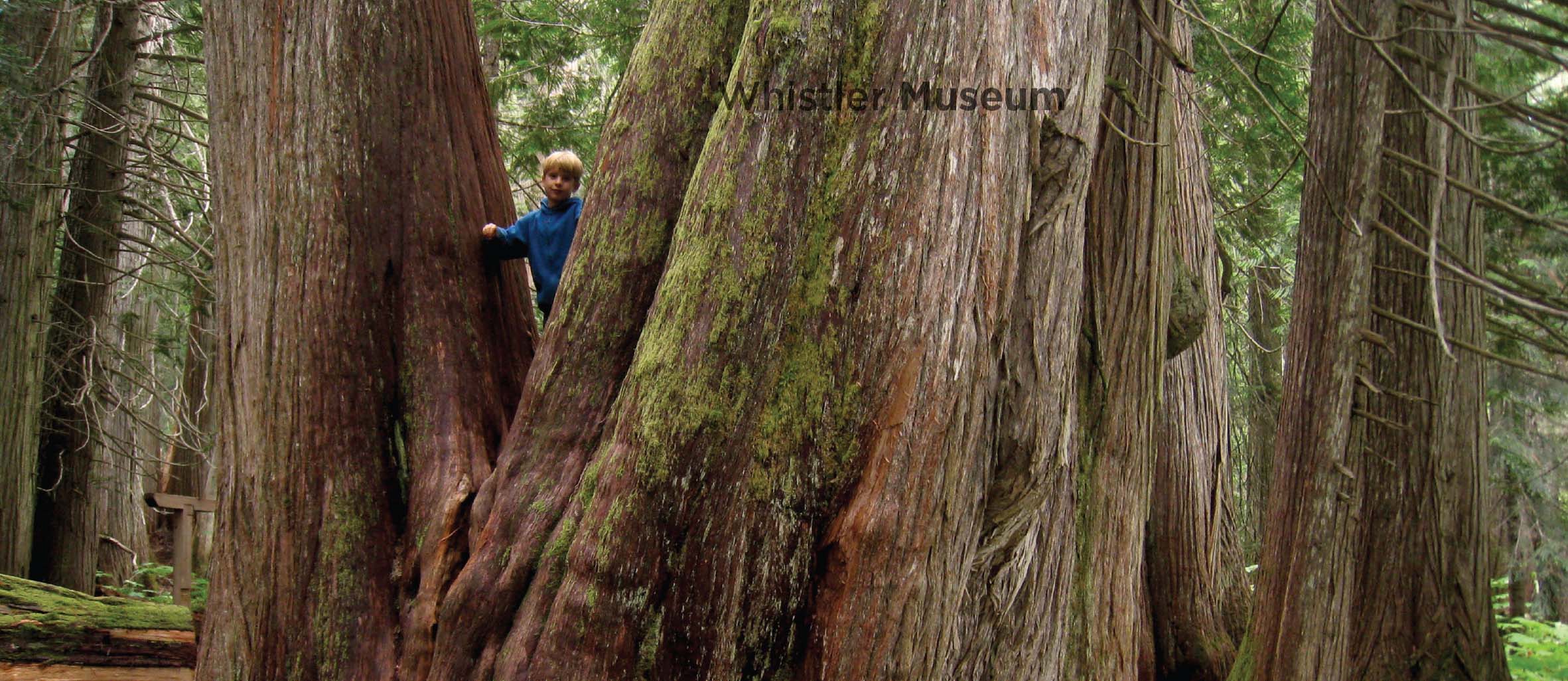
 In 2000, the Emerald Forest Conservation Area was permanently protected through a legally binding agreement between the RMOW and The Land Conservancy of BC. Emerald Forest ecosystems include wetlands, which connect to the much larger ROGD corridor, as well as upland forest, which connects to wetlands on most sides and is significant habitat for many species. Much of the upland forest is unlogged, and some of the biggest trees are almost 400 years old!

 I hope you have a renewed appreciation for the work done by the RMOW, Intrawest, and the community at large to protect the Emerald Forest for recreation and, more urgently, as an essential link in a protected wetland corridor. The ROGD green belt is vital for protecting Whistler’s biodiversity and resilience against climate change, a basic need for both people and wildlife.  

Wetlands: Nature’s Undervalued SuperheroesWetlands: Nature’s Undervalued Superheroes

0 Comments


By: Kristina Swerhun

“I don’t understand why when we destroy something created by man, we call it vandalism, but when we destroy something created by nature, we call it progress.”― Ed Begley Jr.

From the outset and as indicated in Whistler’s first Official Community Plan, the Resort Municipality of Whistler (RMOW) intended to protect nature. However, it’s difficult to build a resort municipality without impacting nature and, unfortunately, wetlands are located exactly where the RMOW and developers wanted to build—the flat valley bottom. 

The River of Golden Dreams wetlands with Nicklaus North Golf Course on the left and Alta Lake in the background. 
(Photo credit: Diamond Head Consulting)

Biodiversity is the foundation of healthy, functioning ecosystems upon which all life depends. Wetlands are vital to biodiversity, and not just to the many species that can survive nowhere else. Wetlands also benefit humans by purifying water, protecting against floods and drought, recharging aquifers, and acting as effective wildfire barriers—roles that are increasingly important as the climate changes.  

Whistler’s wetland history

In 2007, wetland loss was the subject of a Simon Fraser University (SFU) study that compared aerial photos of Whistler taken in 1946 and 2003. Researchers found that Whistler’s wetlands decreased by 72%. Note that the study area extended south of Whistler to Daisy Lake, and doesn’t contain earlier and more recent losses, including when the new BC Transit station was built on a wetland near Nesters ahead of the 2010 Olympic and Paralympic Winter Games.

According to the SFU study, Whistler’s largest wetland area today—which follows the River of Golden Dreams—used to be two to three times its current size. Within this corridor, roughly half of the wetlands were lost to residential development, while the other half were lost to the Whistler Golf Course (1983) and Nicklaus North Golf Course (1996). 

There’s some good news, too. Before Nicklaus North GC opened, 650 people attended a public hearing over concerns about wetlands. This support and advocacy by the then-nascent Association of Whistler Area Residents for the Environment (AWARE) and others saved 28 hectares (70 acres) of wetland from being filled in by the golf course. Also, the River of Golden Dreams corridor now has protected areas along its length, which is the subject of next week’s article. 

Beavers for the win

The health of wetlands is directly tied to the presence of beavers; one cannot thrive without the other. The 1935 Mammals of the Alta Lake Region report states that “the beaver has been completely trapped out in the district for over 20 years.” Even after the demand for fur stopped, beavers were affected by development and loss of their wetland habitat. Despite these challenges, beavers have been on the road to recovery. In 2024, researcher Bob Brett documented 60 inhabited beaver lodges and estimated that 300-350 beavers live in Whistler. This example of nature’s resilience shows us that recovery is possible, provided we offer life the opportunity to return.

Mammals of the Alta Lake Region 1935.

A community-wide effort is essential for protecting Whistler’s remaining wetlands. In 2024, the RMOW developed the Priority Habitat Framework, a plan to help protect Whistler’s most important natural habitat, including wetlands. Another way to protect nature is through grassroots advocacy. When community members speak up about their concerns and show they care for nature, it not only raises awareness—it also fosters hope and inspires others to take action.

Looking back on Whistler’s natural historyLooking back on Whistler’s natural history

0 Comments

By Kristina Swerhun

What you do makes a difference, and you have to decide what kind of difference you want to make.” – Jane Goodall

What brought you to Whistler, and why did you decide to stay, or keep coming back to visit? For many, or perhaps most of us, Whistler’s magnificent natural environment is a major reason. As a long-time resident, I am grateful to reside on the unceded shared territory of the Lil’wat Nation and Squamish Nation, who have been stewards of the land and waters in this region since time immemorial.

Whistler is “a community set within the wild,” Liz McDonald aptly wrote in a recent editorial in the Pique Newsmagazine. We have mountains of life-affirming biodiversity that surrounds us, which you can sense by paying attention to the sounds and sights of the outdoors.

Do you see that stringy stuff hanging from trees? That’s Witch’s Hair lichen, indicators of clean air. Hear those frog calls in spring? Those are Pacific Tree Frogs, indicators of clean water. Experience the sights and sounds of beaver activity? The wetlands they create and maintain provide vital habitat and protect against flooding, drought, and wildfires. Do you find peace in old-growth forests? They house species found nowhere else, store massive amounts of carbon, and offer significant cultural and recreational value.

 The future site of Whistler Village, c. 1973. RMOW Collection.

In celebration of the 50th anniversary of the creation of the Resort Municipality of Whistler (RMOW), this is the first in a series of articles that will focus on the impact our resort community has had on nature—successes, challenges, and looking to the future.

In 1914, with the arrival of the railway, Whistler’s tourism, logging and mining industries opened for business. Then, in 1966, with the official opening of Whistler Mountain, tourism began to take priority over the extraction of trees and ore. When the RMOW was established in 1975, it recognized that the local economy was primarily driven by tourism. Indeed, outdoor recreation was recognized as Whistler’s prime resource in the 1976 Official Community Plan (OCP).

OCPs are about setting intentions. I was inspired to learn that in the original OCP, the first of ten community development objectives was “To protect and enhance the natural environment.” In our current OCP, protecting nature is one of the three pillars of our community vision: a place where our community thrives, nature is protected, and guests are inspired.

So, how are we doing? Did we follow up on our intentions to protect nature with actions?

It takes teamwork to protect non-human species that can’t advocate for themselves. These articles will highlight programs, individuals and groups that have worked together to safeguard Whistler’s natural environment.

When the needs of a community cannot be fully met by government or the private sector, non-profit groups fill the gaps. Whistler is fortunate to have numerous non-profit groups guided by volunteer boards of hopeful community members dedicated to protecting nature.

Whiskey Jack / Canada Jay (Perisoreus canadensis) Photo Credit: Bob Brett

Some of these groups will be highlighted in coming articles (on the Whistorical blog and in the Pique Newsmagazine) and include the Whistler Museum and Archives, formed in 1986; Association of Whistler Area Residents for the Environment (1989); Get Bear Smart Society (1995); Whistler Community Foundation (1999); Whistler Naturalists (1999); Sea to Sky Invasive Species Council (2009); Cheakamus Community Forest Society (2009); Coast to Cascades Grizzly Bear Initiative (2013); and Whistler Lakes Conservation Foundation (2022).


This is the first in a series of articles that will focus on the impact our resort community has had on nature—successes, challenges, and looking to the future.

Kristina Swerhun is a biologist who has managed the Whistler Museum’s Discover Nature program since 2015 and provides public nature training. A long-time Whistler Naturalists volunteer, a Certified Interpretive Guide Trainer, and works with the Resort Municipality of Whistler on the Interpretive Panel Project, including writing and narrating the Biodiversity 101 video.

What’s the first step in protecting nature? What’s the first step in protecting nature? 

0 Comments

By Kristina Swerhun

“I think sometimes we need to take a step back and just remember that we’ve no greater right to be on the planet than any other animal.” – David Attenborough

From Whistler’s first Official Community Plan in 1976 to the most recent, “protecting nature” has consistently been listed as a high priority. I’d like to think the ongoing commitment stems from two reasons. First, protecting nature means protecting biodiversity, which is the foundation of healthy, functioning ecosystems of which we are a component. So, we’re protecting biodiversity because we can’t survive without it. Second, and this requires a slight shift in perspective, I share David Attenborough’s belief that every species has an equal right to exist. So, hopefully, we’re protecting species regardless of their usefulness to humans. 

The first step in protecting biodiversity is to know what species and ecosystems are present and their current health. If we don’t know this information, we have no baseline for understanding what needs to be done to protect and restore ecosystems.

Early biodiversity monitoring efforts

The first report on Whistler’s biodiversity, Mammals of the Alta Lake Region, was published in 1935 by Ken Racey and Ian McTaggart Cowan and lists 42 mammal species. 

 Bob Brett, Whistler’s Biodiversity Champion, at an active beaver lodge at Lost Lake. (Photo: Bob Brett) 

Birds were inventoried next, with Racey listing 137 species in 1948. The tradition of “citizen science” in bird studies continued, as Max Götz, Nancy Ricker, and Vicky Troup updated the list to include 175 bird species in 1996, following ten years of monitoring. [Note that today’s birding efforts, under the umbrella of the Whistler Naturalists and led largely by Karl Ricker, Heather Baines and Chris Dale, bring our list up to 274 bird species.]

By 2005, the total number of species documented in Whistler, including mammals, birds, and other species, was approximately 335. What happened next demonstrates to me how much one person can enrich our community. 

Enter Bob Brett: Whistler’s biodiversity champion

Bob Brett is a long-time resident, a Registered Professional Biologist, founding President of the Whistler Naturalists (1999), and founder of the Whistler Biodiversity Project (WBP). Operating since 2004, the WBP is Whistler’s primary source of biodiversity data, gathering information through surveys, engaging specialists, and compiling data. 

One of the primary goals of the WBP is to document species, enabling more informed management decisions that support biodiversity. However, Bob points out that although this is fundamentally true, information alone is not enough. Without political will, biodiversity conservation can get ignored. 

It’s worth noting that volunteers at the Whistler Naturalists have contributed almost half of all WBP records through long-running annual events that Bob founded and continues to lead: Fungus Among Us (since 2004) and BioBlitz (since 2007). Full disclosure: I’ve been volunteering with Bob and the Naturalists since about 2006, and his mentorship is a big reason why I’m so passionate about the nature-related work I do.

(Photo: Whistler Naturalists)

In the 20 years since the WBP was initiated, an average of 235 species per year have been added to the list, so today we know at least 5,000 species call Whistler home. Amazing! This number continues to increase annually, thanks to Bob’s commitment to understanding nature. However, the numbers alone aren’t even the most intriguing part. 

Bob’s long involvement with the WBP has contributed significantly to our understanding of Whistler’s natural environment. His name appears on the RMOW’s Biodiversity and Ecosystem Health web page across a range of projects, including Ecosystem Monitoring Reports, Species at Risk Reports, and the Priority Habitat Framework. He has also worked on managing invasive species, studying forest age, and monitoring active beaver lodges. His efforts have helped build a clearer picture of local biodiversity and encouraged others to take an interest in this work.


This is the second in a series of articles that will focus on the impact our resort community has had on nature—successes, challenges, and looking to the future.

Kristina Swerhun is a biologist who has managed the Whistler Museum’s Discover Nature program since 2015 and provides public nature training. She is a long-time Whistler Naturalists volunteer, a Certified Interpretive Guide Trainer, and works with the Resort Municipality of Whistler on the Interpretive Panel Project, and wrote and narrated the Biodiversity 101 video.