Help protect biodiversity from invasive speciesHelp protect biodiversity from invasive species
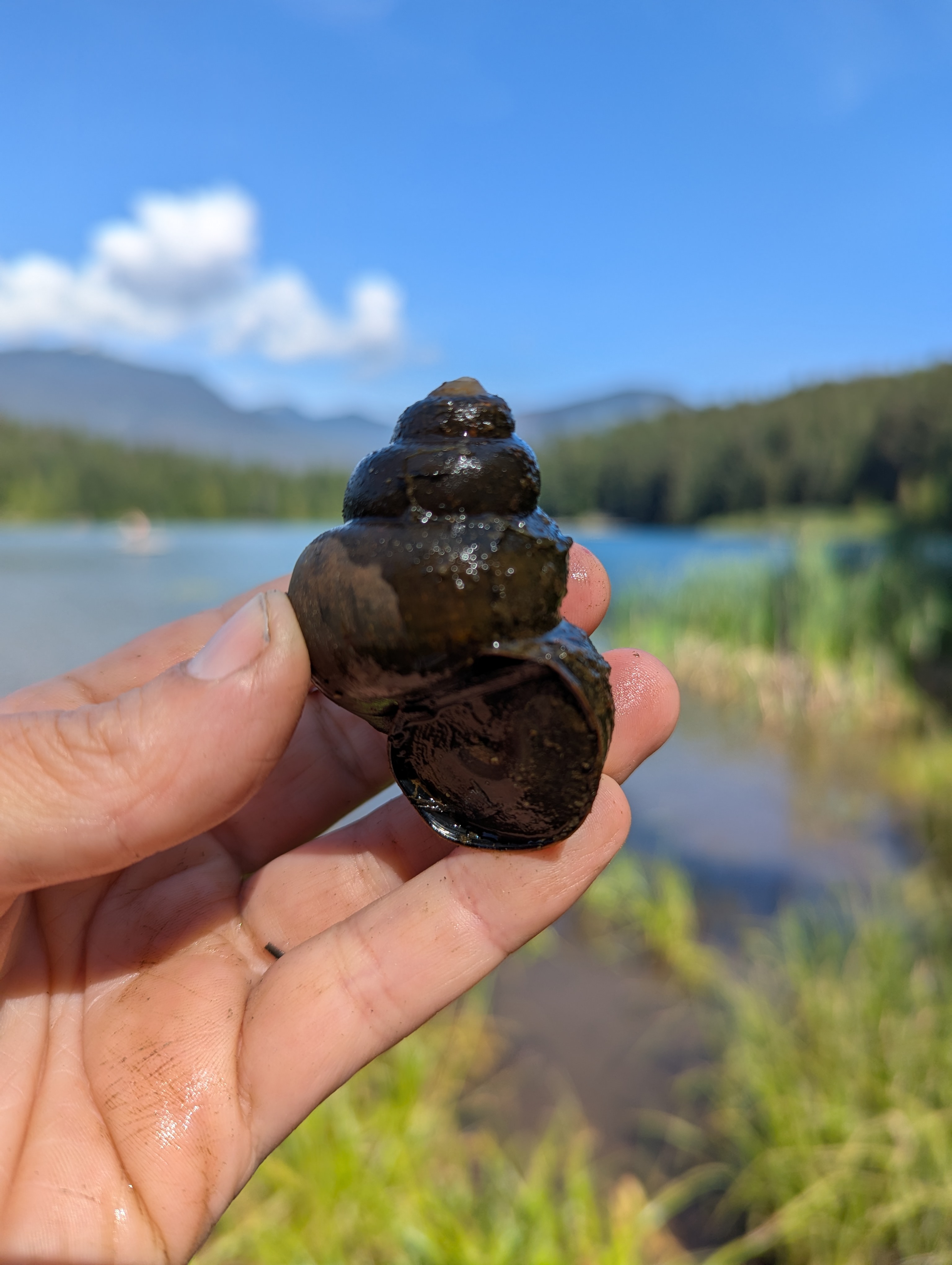
Feature Image: Chinese Mystery Snail at Lost Lake
“Nature once determined how we survive. Now we determine how nature survives.” – Sir David Attenborough
Whistler is fortunate to have the Sea to Sky Invasive Species Council (SSISC) to help protect biodiversity, our strongest natural defence against climate change. SSISC was formed in 2009 to minimize the threat of invasive species—species introduced from other regions, primarily by humans, that rapidly spread and cause significant harm to the environment, the economy, or human health.
It’s often mentioned that invasive species are the second most significant threat to biodiversity after habitat loss. What’s less commonly cited is that both invasive species and habitat loss are driven by economic growth. When we don’t acknowledge economic growth as the primary cause of biodiversity loss, we may believe that, with precautions and technological advances, we can continue to grow forever on a finite planet. However, as Sir Attenborough also has said, anyone who believes this is “either a madman or an economist.”
Some relatively good news among the bad news of invasive species is that, since mass access here was relatively recent (began with the arrival of the railway in 1914), Whistler has been exposed to invasive species for less time than our neighbours in Squamish (mid-1800s) and Pemberton (also mid-1800s when 30,000 gold-rushers passed through). Another positive is that ecologically minded residents have been removing invasive plants on their own initiative for years before SSISC formed. These advantages enable SSISC to now eradicate high-priority invasive plants, such as Scotch Broom, Himalayan Blackberry, and others, from Whistler.
The bad news is that humans spread invasive species, and the Resort is becoming busier, especially in the warmer months when invasives are more likely to spread. One unfortunate example is Whistler’s lakes. Most have been stocked with invasive Rainbow Trout for sport fishing, some as early as the 1920s. Unfortunately, not only did Rainbow Trout displace native Cutthroat Trout, but fish stocking can also introduce other invasive species that hitchhike in transported water and mud. Additionally, lake users who don’t “Clean Drain and Dry” their equipment risk transporting and spreading invasive species. Finally, many released aquarium pets become invasive species, and sadly, Whistler has multiple water bodies where released goldfish are devastating native fish and amphibians.

The Whistler Museum operates its Discover Nature program at Lost Lake every summer, so we’re attuned to the ecology of the lake. We noticed giant snails (up to 6 cm) a few years ago, which seemed out of place, and indeed, they were. They turned out to be invasive Chinese Mystery Snails, and this year their populations grew exponentially—a typical trajectory for invasive species. SSISC confirms they are present in other Whistler lakes as well, but our concern for Lost Lake specifically is that it is the only place in the valley where Western Toads breed. The invasive snail can harm aquatic food webs, which the Western Toad is a big part of in Lost Lake.
We’re looking forward to working with SSISC and the municipality to see what can be done to protect Western Toads from invasive species. How the snails arrived is currently unknown, but could be any of the reasons above or a vector we don’t yet understand. To learn more about invasive species and how you can protect biodiversity, please visit SSISC.ca.