
Coexisting with Whistler’s BearsCoexisting with Whistler’s Bears
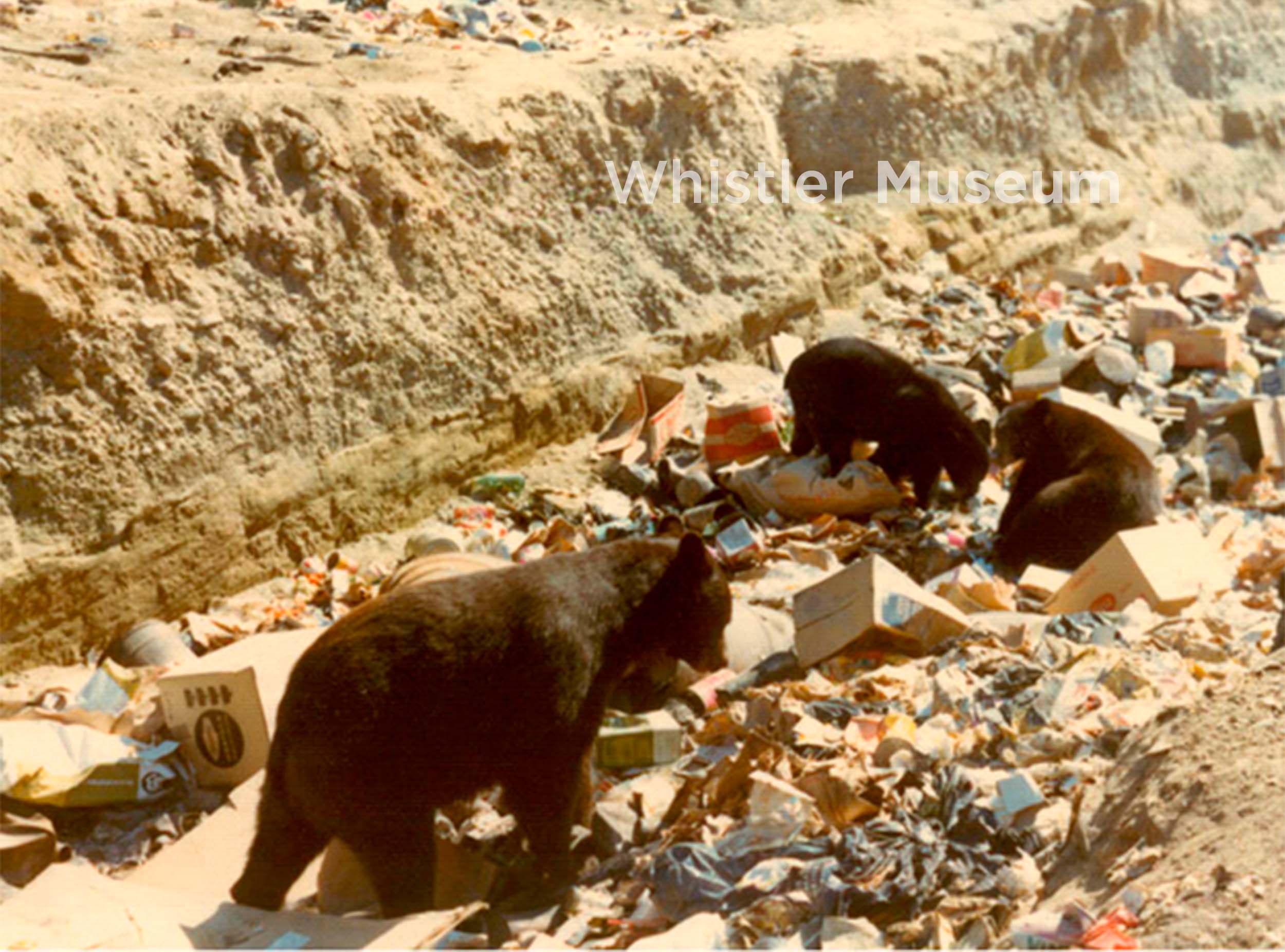
Cover Image: Bears in the garbage dump (future site of Whistler Village), ca. 1965. Petersen Collection.
“Like us, animals feel love, joy, fear and pain, but they cannot grasp the spoken word. It is our obligation to speak on their behalf, ensuring their well-being and lives are respected and protected”.
– Sylvia Dolson

Not long ago, the general feeling in the community was that Whistler had a “bear problem”, but that missed the point. The issue was never the bears. The real problem is how people handle food and garbage while living in the middle of bear country. Whistler was built in prime black bear habitat, so it’s no surprise that people cross paths with them often. Bears have an exceptional sense of smell and are naturally drawn to anything that offers an easy, high-calorie reward, whether it’s garbage, barbecue residue, or pet food left outdoors.
When a bear discovers easy access to human food, everything changes. They lose their natural caution around people and begin searching for effortless meals wherever they can find them, sometimes causing damage in the process. This puts both people and their property at risk and puts the bears’ lives in danger. Any bear seen as assertive or “too comfortable” around humans is usually killed. When a bear pays the price for human behaviour, it is a preventable loss.
Between 1990 and 2016, 263 bears were killed in Whistler as a result of preventable conflict, an average of 10 each year. A great deal of work has gone into reducing those numbers, and the community has made encouraging progress. Between 2016 and today, 38 bears have been killed — still far too many, but a meaningful decrease that reflects years of education, planning, and commitment to coexistence.

Efforts to make Whistler safer for bears took shape in 1995 with the creation of the Get Bear Smart Society. The organization focused on reducing human-caused problems for bears through education, science-based solutions, and community collaboration. Whistler is fortunate that Sylvia Dolson served as Executive Director for 21 years. Shortly after arriving in 1996, she read a newspaper headline about a “garbage bear” being destroyed, and that moment sparked her dedication to advocacy.
Sylvia founded the Bear Working Group, bringing together municipal staff, enforcement agencies, conservation officers, waste management partners, Whistler Blackcomb, and community members. This collaborative approach became the backbone of Whistler’s progress. Under her leadership, the community strengthened education, encouraged responsible behaviour, and worked to reduce attractants that bring bears into conflict.
In the late 1990s, the municipality began installing bear-resistant garbage cans and updating bylaws addressing attractants. These steps, paired with sustained education and enforcement, significantly reduced conflict over time. In 2010, Whistler applied for Bear Smart Community status, a provincial program that recognizes communities addressing the root causes of human-bear conflict.
Whistler achieved Bear Smart Community Status in 2011, a milestone reflecting the community’s willingness to take responsibility for living in bear country. Before leaving for the Sunshine Coast in 2017, Sylvia was recognized by the municipality for her years of service and her leadership on behalf of bears. What began as grassroots advocacy has grown into an established, long-term program — a powerful example of what is possible when people choose compassion, responsibility, and respect for the wildlife that shares their home.


